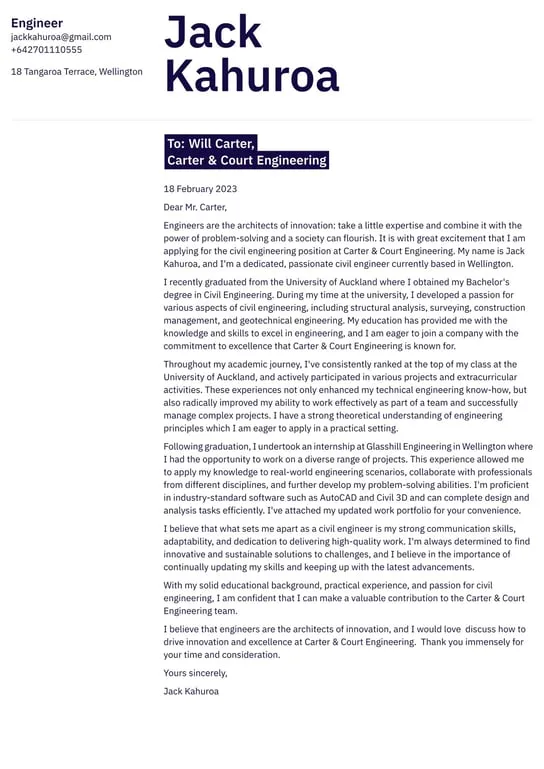
What is an Engineering Cover Letter
An engineering cover letter is a crucial document that accompanies your resume when applying for engineering positions. It serves as a personal introduction, allowing you to highlight your skills, experience, and enthusiasm for the specific role and company. Unlike a resume, which provides a factual overview of your qualifications, a cover letter enables you to tell your story and explain why you are the perfect fit for the job. It provides a platform to showcase your personality, communication skills, and understanding of the engineering field. A well-crafted cover letter can significantly increase your chances of getting an interview and ultimately landing your dream engineering job. It’s your first opportunity to make a strong impression on the hiring manager.
Why is a Cover Letter Important
Cover letters are important because they provide context to your resume. They allow you to explain gaps in your employment history, elaborate on specific projects, and demonstrate your genuine interest in the company and the position. Many hiring managers consider a cover letter to be a critical component of the application process, using it to assess your writing skills, attention to detail, and overall suitability for the role. It’s a chance to differentiate yourself from other applicants and showcase your unique value proposition. A strong cover letter demonstrates your proactive approach and commitment to securing the job, making it a vital tool in your job search strategy.
Key Components of an Engineering Cover Letter

Header and Contact Information
The header of your engineering cover letter should include your full name, address, phone number, and email address. It should be formatted consistently with your resume. Below your contact information, include the date, the hiring manager’s name (if known), their title, and the company’s name and address. Ensuring this information is accurate and professional sets a positive tone and shows your attention to detail, a crucial quality in engineering.
Professional Greeting
Always address your cover letter to a specific person if possible. Research the hiring manager’s name and use a professional greeting such as “Dear Mr./Ms. Last Name.” If you are unable to find a specific name, use a general greeting such as “Dear Hiring Manager” or “Dear [Company Name] Hiring Team.” Avoid generic greetings like “To Whom It May Concern,” as they can make your application seem impersonal. Using the correct salutation demonstrates your initiative and respect for the recipient.
Opening Paragraph

The opening paragraph is your opportunity to grab the reader’s attention. Start by stating the position you are applying for and how you learned about the opportunity. Briefly mention your key qualifications and why you are excited about the role and the company. Demonstrate your enthusiasm and highlight the value you bring to the table. Avoid generic openings; instead, make it clear why you are interested in this specific position and what makes you stand out from the crowd. For example, you might mention a project you are particularly proud of or a specific skill that aligns with the job description.
Body Paragraphs
The body paragraphs are where you provide detailed information about your skills, experience, and accomplishments. Focus on how your qualifications align with the requirements of the job description. Use specific examples to illustrate your abilities and quantify your achievements whenever possible. Tailor each paragraph to the specific role you are applying for, emphasizing the skills and experiences that are most relevant. This section should be well-organized, easy to read, and demonstrate your understanding of the engineering field.
Highlighting Skills and Experience
Clearly outline your relevant skills and experiences. Use keywords from the job description to show that you meet the requirements. Provide examples of projects you’ve worked on, the technologies you are proficient in, and any relevant certifications or licenses. Focus on the skills that are most important to the employer. Your goal is to demonstrate that you not only possess the necessary skills but also have practical experience in applying them.
Quantifying Achievements

Whenever possible, quantify your achievements. Instead of saying you “improved efficiency,” state by how much. For instance, “Improved production efficiency by 15% through the implementation of a new automation system.” Using numbers and data makes your accomplishments more impactful and demonstrates your ability to deliver results. This approach helps the hiring manager understand the tangible value you brought to your previous roles.
Tailoring to the Job Description
Carefully review the job description and tailor your cover letter to match the specific requirements. Highlight the skills and experiences that the employer is seeking. Use the same language and keywords from the job description to demonstrate that you understand the role and are a good fit for the company. This demonstrates your attention to detail and your understanding of what the employer is looking for, making you a more competitive candidate. Customize each cover letter to the specific job.
Closing Paragraph
In the closing paragraph, reiterate your interest in the position and the company. Briefly summarize why you are a strong candidate and what you can bring to the role. Express your enthusiasm for the opportunity and thank the hiring manager for their time and consideration. This section should leave a positive final impression and reinforce your desire to be considered for the position.
Call to Action

End your cover letter with a clear call to action. State that you are eager to discuss your qualifications further and are available for an interview at their earliest convenience. Include your phone number and email address again for easy contact. This step shows your initiative and makes it easy for the hiring manager to take the next step in the hiring process. A strong call to action can significantly increase your chances of being contacted for an interview.
Formatting and Design Tips
Font and Readability
Choose a professional and easy-to-read font such as Times New Roman, Arial, or Calibri. Use a font size between 10 and 12 points. Ensure your cover letter is well-organized with clear headings, bullet points, and ample white space. Proper formatting improves readability and makes it easier for the hiring manager to scan your letter quickly. Avoid using overly stylized or decorative fonts, as they can be distracting. Your goal is to present information clearly and concisely.
Use of White Space

Utilize white space to make your cover letter visually appealing and easy to read. Use short paragraphs and ample spacing between sections. Avoid overcrowding your cover letter with text. White space allows the reader’s eye to rest and helps to highlight important information. A well-formatted cover letter demonstrates attention to detail and professionalism, making a positive impression on the hiring manager. Effective use of white space can greatly improve readability.
Proofreading and Editing
Thoroughly proofread your cover letter for any grammatical errors, typos, or inconsistencies. Ask a friend or colleague to review your cover letter as well, as they may catch errors that you missed. Errors can detract from your credibility and professionalism. Ensure the tone is professional and the language is clear and concise. Proofreading is a critical step in the application process, as it shows your attention to detail.
Engineering Cover Letter Samples
Sample Cover Letter 1

Include an example of a cover letter for a specific engineering role, such as a mechanical engineer. This sample should follow the guidelines provided above, highlighting the candidate’s skills, experience, and achievements. The sample should be formatted professionally and easy to read. The example must have a clear structure with a strong opening, compelling body paragraphs, and a persuasive conclusion. The content should be tailored to a specific job description, reflecting the skills and qualifications sought by the employer.
Sample Cover Letter 2
Include another cover letter sample, this time for a different engineering discipline, such as civil engineering. This sample should follow a similar format to Sample 1, but with content that reflects the unique requirements and expectations of civil engineering roles. The example should showcase the candidate’s relevant skills, projects, and accomplishments, emphasizing their ability to contribute effectively to the organization. The cover letter sample should be well-written, error-free, and effectively highlight the applicant’s qualifications for the target position.
Sample Cover Letter 3
Include a sample for electrical engineering. This sample should highlight relevant experience, such as experience with circuit design or power systems. The sample should be well-organized, with a clear structure and compelling content. The language should be professional, and the cover letter should be free of errors. Highlight the applicant’s qualifications, projects, and achievements, emphasizing their ability to meet the specific requirements of the job description.
Common Mistakes to Avoid
Generic Content
Avoid using generic or boilerplate language in your cover letter. Tailor each cover letter to the specific job and company you are applying to. Do not reuse the same cover letter for multiple applications. Generic content fails to demonstrate your genuine interest and can make you appear less engaged. Instead, demonstrate your understanding of the role and the company by referencing specific projects or initiatives. The goal is to make your application stand out from the crowd.
Typos and Grammatical Errors
Typos and grammatical errors can damage your credibility and make you appear unprofessional. Always proofread your cover letter carefully before submitting it. Use a grammar checker, and ask a friend or colleague to review it as well. Errors can create a negative impression on the hiring manager, signaling a lack of attention to detail. A polished, error-free cover letter is essential to making a positive first impression. Take the time to ensure accuracy.
Lengthy Cover Letters
Keep your cover letter concise and to the point. Aim for one page or less. Hiring managers often have limited time to review applications, so make sure your cover letter is easy to read and quickly conveys your key qualifications. Focus on the most relevant information and avoid unnecessary details. A well-written, concise cover letter is more likely to capture the hiring manager’s attention and leave a positive impression. Be direct and highlight what makes you the best fit for the job.
Adapting Your Cover Letter for Different Engineering Roles
Civil Engineering
When applying for civil engineering positions, highlight your experience with infrastructure projects, construction management, and design software like AutoCAD or Civil 3D. Emphasize your knowledge of relevant codes and regulations, such as those related to structural integrity and environmental impact. Tailor your cover letter to reflect the specific requirements of the job description, showcasing your relevant experience with project management, site analysis, or transportation planning. Use keywords specific to civil engineering, such as “structural analysis,” “site development,” and “construction supervision.”
Mechanical Engineering
For mechanical engineering roles, emphasize your experience with design, manufacturing, and testing. Highlight your proficiency in CAD software, such as SolidWorks or CATIA, and any experience with thermodynamics, fluid mechanics, or heat transfer. Tailor your cover letter to reflect the job description by showcasing your abilities in areas like product development, robotics, or HVAC systems. Utilize keywords specific to mechanical engineering, such as “FEA analysis,” “prototyping,” and “systems design.”
Electrical Engineering
When applying for electrical engineering positions, showcase your experience with circuit design, power systems, and electronics. Highlight your proficiency in programming languages like Python or C++, and any experience with simulation software. Tailor your cover letter to the job by showcasing your expertise in areas such as embedded systems, control systems, or renewable energy. Use relevant electrical engineering keywords, like “circuit design,” “power distribution,” and “embedded systems” to grab the hiring manager’s attention. Remember to highlight any experience with industry-specific software or hardware.
Conclusion
Crafting a compelling engineering cover letter is a crucial step in securing your desired job. By following these guidelines, highlighting your skills and experience effectively, and tailoring your letter to each specific role, you can significantly increase your chances of getting an interview. Remember to proofread your cover letter carefully and seek feedback from trusted sources. With a well-written cover letter, you will be well on your way to advancing your career and achieving your professional goals. Good luck in your job search!