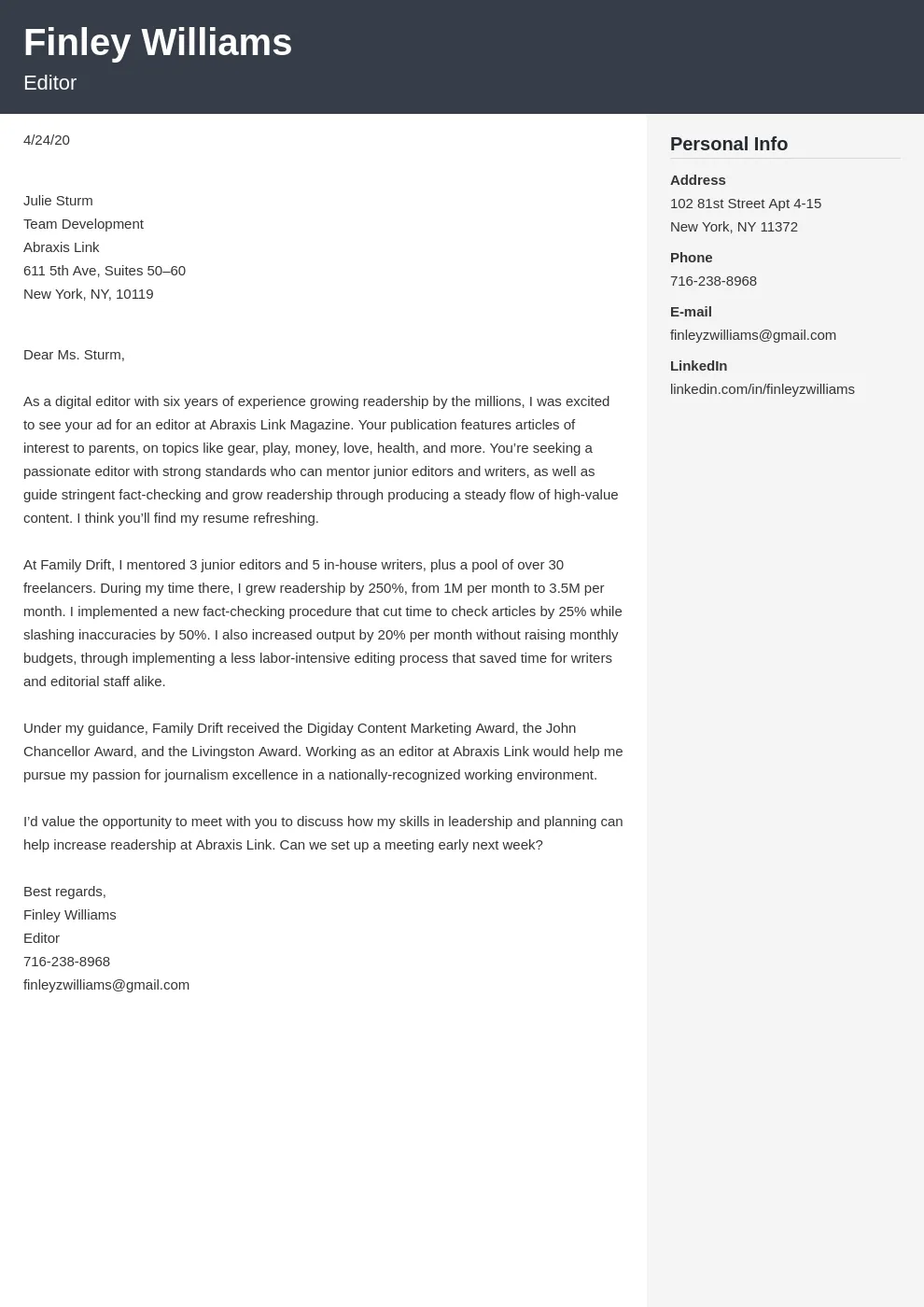
Why is Cover Letter Editing Crucial?
Your cover letter is often the first impression you make on a potential employer, serving as a crucial introduction that can significantly impact your job application’s success. It’s your chance to showcase your personality, enthusiasm, and suitability for the role beyond the details presented in your resume. Effective cover letter editing ensures this first impression is positive and compelling, grabbing the hiring manager’s attention and encouraging them to delve deeper into your qualifications. A well-edited cover letter is a reflection of your attention to detail, communication skills, and professionalism, all of which are highly valued by employers. Conversely, a poorly written or unedited cover letter can lead to immediate dismissal, regardless of your qualifications. The ability to effectively convey your value proposition and stand out from the competition hinges on meticulous cover letter editing, making it a critical step in any job search strategy. This initial document sets the tone for your candidacy, highlighting your interest in the position and showcasing your potential contributions to the company. Therefore, investing time and effort in refining your cover letter through careful editing is a must.
Boosting Your Chances of Getting Noticed
In a competitive job market, standing out from the crowd requires more than just a list of qualifications; it demands a polished and impactful presentation. Cover letter editing significantly enhances your chances of getting noticed by ensuring your application reflects clarity, professionalism, and a genuine interest in the role. By meticulously reviewing your cover letter, you eliminate errors, refine your language, and strategically highlight the skills and experiences that align with the job requirements. This focused approach captures the recruiter’s attention, making them more likely to consider your application seriously. A well-edited cover letter demonstrates your ability to communicate effectively and pay attention to detail, traits that employers highly value. It also shows that you’ve invested the time and effort to present yourself in the best possible light, which can signal your commitment to the opportunity and your willingness to go the extra mile. Ultimately, the goal is to make a strong first impression that encourages the hiring manager to move you to the next stage of the hiring process. Through careful editing, you create a compelling narrative that positions you as the ideal candidate, increasing your chances of getting an interview and ultimately landing the job.
Common Cover Letter Blunders

Many cover letters are overlooked due to easily avoidable errors that can quickly undermine your candidacy. Common blunders include grammar and spelling mistakes, which detract from your professionalism and attention to detail. Vague language and generic statements that fail to connect your skills and experience to the specific job requirements are also frequent issues. Another significant mistake is using a cover letter template without tailoring it to the specific role and company; a generic letter suggests a lack of genuine interest. Poor formatting, such as inconsistent margins or font choices, can make your letter appear sloppy and unprofessional, making it difficult for the reader to focus on your content. Failing to address the hiring manager by name or using the wrong company name demonstrates a lack of care and attention. Finally, simply restating your resume without adding new insights or demonstrating your enthusiasm for the opportunity can also render your cover letter ineffective. Recognizing these common blunders and proactively addressing them through careful editing is essential for creating a cover letter that grabs attention and enhances your chances of getting an interview.
Grammar and Spelling Errors
Grammar and spelling errors are among the most detrimental mistakes you can make in your cover letter. These errors immediately undermine your credibility and make you appear unprofessional and careless. A single typo or grammatical error can lead a hiring manager to question your attention to detail and communication skills, both of which are highly valued in nearly every professional setting. Proofreading your cover letter meticulously is essential to catch these errors, but it is even better to use spelling and grammar check tools, and to ask someone else to review your document. Reading your cover letter aloud can help you catch awkward phrasing or errors that you might miss when reading silently. Consistently making these types of errors demonstrates a lack of investment in the application process and suggests that you might approach your work with a similar lack of attention. Taking the time to eliminate grammar and spelling errors is a simple yet powerful way to elevate your cover letter and increase your chances of getting noticed by potential employers.
Formatting Faux Pas
Formatting plays a significant role in the readability and overall professionalism of your cover letter. Poor formatting choices can make your letter difficult to read, leading to the hiring manager quickly losing interest. Inconsistent margins, improper spacing, and unprofessional fonts can create a cluttered and unappealing appearance. Your cover letter should have a clean, easy-to-read layout that enhances, rather than distracts from, your content. Using a standard font like Times New Roman, Arial, or Calibri ensures readability and a professional look. Ensure consistent spacing between paragraphs and sections to help the reader easily navigate the document. Use clear, concise formatting with bullet points to make your key qualifications stand out. Aligning your text properly and avoiding overly long lines of text improves readability. Careful attention to formatting shows that you are detail-oriented and respect the reader’s time. A well-formatted cover letter indicates professionalism and can significantly improve the overall impression you make on the hiring manager, making it more likely that they will read and consider your application carefully.
Content Clarity and Conciseness

Clarity and conciseness are critical for an effective cover letter. Hiring managers often have limited time to review applications, and a clear, concise letter will quickly capture their attention. Avoid using overly complex language or jargon that might obscure your message. The goal is to clearly communicate your skills and qualifications and how they align with the job requirements. Keep your sentences and paragraphs brief and focused, ensuring that each word contributes to your overall narrative. Proofread your letter carefully to eliminate any unnecessary words or phrases. Make sure that your writing is easy to understand. Use strong action verbs to highlight your accomplishments and demonstrate your impact. When describing your experience, provide specific examples and quantify your achievements whenever possible. Focus on the most relevant skills and experiences that align with the job description. A well-edited cover letter presents your qualifications in a clear, concise manner, which increases the likelihood of the hiring manager quickly understanding your value proposition and considering you for the role.
Addressing the Recruiter
Personalizing your cover letter by addressing the recruiter or hiring manager by name is crucial for making a positive impression. This simple act demonstrates that you have taken the time to research the company and the specific role. Using a generic greeting, such as “To Whom It May Concern”, suggests that you are sending out a mass application and that you have not given the opportunity adequate attention. If possible, find the name of the hiring manager or the recruiter responsible for reviewing applications. LinkedIn is a great resource for finding this information, and a quick search can often provide the details you need. If you can’t find a specific name, you can use a more professional greeting, such as “Dear Hiring Manager”. Tailoring your opening to the specific individual adds a personal touch and shows that you are genuinely interested in the opportunity. Addressing the recruiter by name immediately establishes a connection and creates a more positive impression, which makes the hiring manager more likely to read your application carefully and consider you for the role.
Understanding the Job Description
A thorough understanding of the job description is fundamental to crafting an effective cover letter. Carefully analyze the job posting, looking for the key requirements, skills, and qualifications that the employer is seeking. Take note of the essential duties and responsibilities of the role, as well as any specific keywords or phrases used in the description. The purpose of your cover letter is to demonstrate how your skills and experience align with the employer’s needs. Tailor your letter to the specific job requirements by highlighting the relevant skills and experiences outlined in the job description. Use the same language and keywords used in the job posting to show that you understand the role and can effectively communicate your qualifications. Identify the employer’s priorities and address them directly in your letter. By demonstrating that you have taken the time to understand the job requirements, you increase your chances of getting noticed and being considered for the position. A cover letter that directly addresses the job description will grab the hiring manager’s attention and demonstrate that you are a strong match for the role.
Tailoring Your Letter

Tailoring your cover letter to each specific job application is essential for creating a compelling document that grabs the hiring manager’s attention. A generic, one-size-fits-all cover letter will likely be overlooked, as it does not demonstrate a genuine interest in the role or the company. Start by carefully reviewing the job description and highlighting the key requirements and desired qualifications. Then, customize your cover letter to address these specific needs. Showcase how your skills and experiences align with the job requirements, using concrete examples to demonstrate your abilities. Use the same language and keywords found in the job posting to show that you understand the role and its responsibilities. Research the company and mention specific aspects that interest you, such as their mission, values, or recent projects. Tailoring your cover letter shows that you have taken the time to understand the job and are genuinely interested in the opportunity. This personal touch will make your application stand out and demonstrate your commitment to the role, increasing your chances of being considered for an interview.
Highlighting Relevant Skills and Experience
Highlighting relevant skills and experience is crucial for convincing the hiring manager that you are a strong candidate for the role. Focus on the qualifications and experiences that align with the job requirements outlined in the job description. Choose the most impactful skills and experiences that directly relate to the responsibilities and expectations of the position. When describing your experience, provide specific examples of your accomplishments and the impact you made in previous roles. Use action verbs to describe your tasks and results, and quantify your achievements whenever possible. For example, instead of saying “Managed projects,” you might say “Managed a team of five to successfully deliver three projects on time and under budget.” Clearly articulate how your skills and experiences have prepared you for the new role and how you can contribute to the company’s success. Tailor your examples to the specific needs of the job. Highlighting relevant skills and experience provides tangible evidence of your capabilities and significantly increases your chances of getting an interview.
Showcasing Your Accomplishments
Showcasing your accomplishments is a vital component of an effective cover letter. It’s not enough to simply list your responsibilities; you need to demonstrate the impact you’ve made in previous roles. Use specific examples to highlight your achievements and quantify your results whenever possible. Instead of saying “Managed a team,” you could say “Managed a team of 10, increasing productivity by 15%.” Quantifiable results provide concrete evidence of your value and make your claims more credible. When describing your accomplishments, use the STAR method: Situation, Task, Action, Result. Describe the situation you were in, the task you needed to accomplish, the actions you took, and the positive results you achieved. Tailor your accomplishments to the specific requirements of the job. By focusing on your achievements, you demonstrate your ability to deliver results and contribute to the company’s success. Highlighting accomplishments proves your value and makes your cover letter more persuasive, significantly improving your chances of getting an interview.
The Power of Strong Action Verbs

Using strong action verbs can significantly enhance the impact of your cover letter. Action verbs demonstrate initiative, drive, and a results-oriented approach. They help you to paint a picture of what you did and the positive impact you made. Instead of using passive language, opt for dynamic verbs that bring your accomplishments to life. For example, instead of saying “Was responsible for sales,” use “Managed sales campaigns, resulting in a 20% increase in revenue.” Start your sentences with powerful verbs to immediately grab the reader’s attention and convey your contributions. Some examples of strong action verbs include: led, managed, implemented, developed, created, improved, achieved, increased, and reduced. By using these action verbs consistently, you transform your cover letter from a list of responsibilities to a compelling narrative of your achievements. A well-crafted cover letter filled with strong action verbs will highlight your abilities and distinguish you from other applicants.
Review and Revise
Reviewing and revising your cover letter is essential for creating a polished and compelling document. This process involves multiple steps to ensure your letter is free of errors and effectively communicates your value to the employer. Start by reading your cover letter aloud, which can help you catch awkward phrasing, grammatical errors, and other issues you might miss when reading silently. Take a break after you write your first draft, and come back to it with fresh eyes. This will allow you to identify areas for improvement and ensure that your message is clear and concise. Review your letter for clarity and conciseness, making sure that each sentence serves a purpose and contributes to your overall message. Check for any inconsistencies in formatting, such as font styles, margins, and spacing. Make sure that your letter is well-organized and easy to read. Look for areas where you can strengthen your writing by using stronger verbs or providing more specific examples. Through thorough review and revision, you ensure your cover letter is error-free and effectively showcases your qualifications, significantly increasing your chances of getting noticed by potential employers.
Proofreading for Perfection
Proofreading for perfection is the final and crucial step in the cover letter editing process. It involves a meticulous examination of your document to ensure that it is entirely free of errors. Proofreading focuses on catching any remaining grammar, spelling, punctuation, and formatting mistakes that could detract from your professional image. Read your cover letter slowly and carefully, paying close attention to every word. Consider reading it backward to catch any errors you might miss when reading it forward. Use a grammar and spell checker, but remember that these tools are not foolproof. They may not catch every error, and they might even miss some of your writing. Ask a friend, family member, or career counselor to proofread your cover letter. A fresh pair of eyes can often catch mistakes that you have overlooked. Proofreading meticulously demonstrates your attention to detail and commitment to quality, and ensures that your cover letter presents you in the best possible light.
Seeking Feedback from Others

Seeking feedback from others is a vital step in the cover letter editing process. It can help you identify areas for improvement and ensure that your letter is clear, concise, and compelling. Ask a trusted friend, family member, or career counselor to review your cover letter. Provide them with a copy of the job description and ask them to evaluate whether your letter effectively addresses the requirements of the role. Request their feedback on your writing style, clarity, and overall presentation. Ask them if the letter accurately reflects your skills and experiences and if it demonstrates your enthusiasm for the opportunity. Be open to their suggestions and willing to make changes based on their input. Another option is to use online resume review services or career coaches, who can provide professional feedback and help you refine your cover letter. Remember that feedback is a valuable tool for improving your writing and increasing your chances of success in your job search. Incorporating feedback from others can significantly enhance the quality and impact of your cover letter, ultimately helping you get noticed by potential employers.