Why You Need a Cook Cover Letter
In the competitive culinary world, a well-crafted cook cover letter is your first impression and your key to getting hired. It’s more than just a formality; it’s your chance to showcase your unique skills, experience, and passion for cooking. A cover letter allows you to go beyond your resume, providing context and personality that can set you apart from other applicants. It’s your opportunity to demonstrate why you’re the perfect fit for a specific role and a particular restaurant. This is your opportunity to demonstrate why you’re the perfect fit for a specific role and a particular restaurant. A strong cover letter can highlight your specific skills, tailor your application to the job requirements, and reveal your enthusiasm for the opportunity. By crafting a compelling cover letter, you increase your chances of landing an interview and ultimately, the job.
Highlighting Your Culinary Skills
Your cover letter should prominently feature your culinary skills, which are the heart of your profession. Start by listing your key competencies, such as knife skills, cooking methods, and knowledge of different cuisines. Mention your proficiency in specific cooking techniques, whether it’s grilling, baking, sautéing, or any other. If you specialize in a particular area like pastry or ethnic cuisine, be sure to highlight this. Be specific and provide examples. Instead of just saying ‘proficient in baking,’ state ‘skilled in baking artisan bread and preparing a variety of pastries, including croissants and pain au chocolat.’ Quantify your achievements whenever possible; for example, ‘managed the preparation of 200 meals per service’ or ‘reduced food waste by 15% through effective inventory management.’ This evidence makes your claims more credible and impactful.
Describing Your Cooking Experience

Detailing your cooking experience is crucial. Start by providing a concise summary of your past roles, including the names of restaurants, their locations, and your job titles. For each position, elaborate on your responsibilities and accomplishments. Focus on the most relevant aspects of your experience for the job you’re applying for. Use action verbs like ‘prepared,’ ‘managed,’ ‘supervised,’ and ’executed’ to describe your tasks and responsibilities. Also, provide specific examples that showcase your ability to perform the tasks required in the job description. Did you manage a specific section of the kitchen? Did you create new menu items? Highlighting these aspects can give you a great advantage. Mentioning the type of cuisine you worked with can be advantageous, especially if you have experience with a particular restaurant’s style of cooking.
Detailing Kitchen Management Skills
Kitchen management skills are highly valued in the culinary industry, and your cover letter should reflect this. If you have experience in managing inventory, ordering supplies, or controlling food costs, make sure to include this. If you’ve supervised a team of cooks, outline your leadership skills, such as training, scheduling, and conflict resolution. Mention any experience with health and safety regulations or food hygiene practices. Demonstrate your ability to work under pressure and manage multiple tasks simultaneously. Your ability to manage kitchen operations smoothly and efficiently can make you a more attractive candidate. For example, if you have a record of reducing food costs or improving kitchen efficiency, be sure to specify those achievements in your letter. By showcasing your management skills, you demonstrate your ability to take on more responsibility and contribute to the success of the restaurant.
Showcasing Your Passion for Food
Passion is what separates a good cook from a great one. Your cover letter is the perfect place to express your love for food and your dedication to the culinary arts. Share what inspires you, whether it’s the joy of creating delicious dishes, the satisfaction of making people happy, or the constant learning that comes with cooking. Mention your favorite cuisines, ingredients, and dishes, and why you are drawn to them. Describe how you stay updated with culinary trends, such as reading cookbooks, attending food shows, or experimenting with new recipes. This is the place to let your personality shine through. Your enthusiasm should be genuine and reflect your eagerness to be a part of the team. By showing your passion, you make it clear that you are not just looking for a job, but a career, and that you’re committed to contributing positively to the restaurant’s culture and success.
Tailoring Your Cover Letter

One of the most important aspects of a successful cook cover letter is tailoring it to each job application. Don’t use a generic template; customize your letter to the specific requirements of the position and the restaurant. Read the job description carefully and highlight the skills and experiences that match what the employer is looking for. Mention specific menu items or cooking styles that the restaurant is known for, and explain how your experience aligns with their offerings. Research the restaurant beforehand; know its reputation, cuisine style, and values. Addressing the hiring manager by name, if possible, shows that you’ve put in the effort to personalize your application. Customize your letter to match the tone and style of the restaurant. This shows that you’ve invested time and effort in learning about the position and the restaurant, which can significantly increase your chances of getting an interview.
Formatting Your Cook Cover Letter
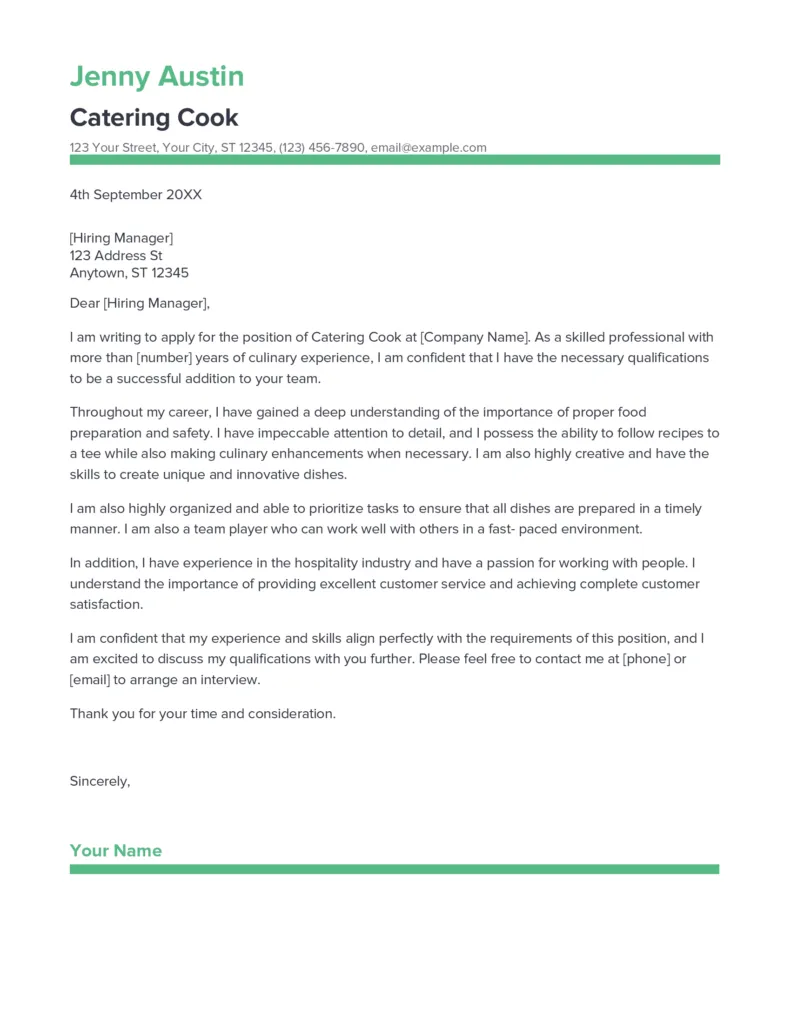
The format of your cook cover letter should be professional and easy to read. Use a standard business letter format, including your contact information, the date, and the employer’s contact information. Keep the letter concise, ideally within one page. Use a clear, easy-to-read font like Arial or Times New Roman, and maintain a consistent font size (11 or 12 points). Use clear headings and paragraphs to break up the text and make it more readable. Ensure that your letter has a professional appearance, free from typos and grammatical errors. Use adequate margins and spacing between paragraphs. The overall layout should be clean and well-organized, with a professional tone. Formatting is very important; it shows that you pay attention to detail and take your application seriously.
Essential Sections of a Cook Cover Letter
A compelling cook cover letter should include several key sections. Start with a strong opening paragraph that grabs the reader’s attention and states your intention to apply for the position. In the body paragraphs, highlight your skills, experience, and passion for cooking, using specific examples and quantifying achievements. Tailor these paragraphs to the specific requirements of the job. Mention any relevant certifications or training, such as food safety certifications or culinary school diplomas. Close your letter with a call to action, expressing your interest in an interview and providing your contact information. Ensure that your letter shows enthusiasm, experience, and professionalism. Each section should be concise and relevant to the job.
Proofreading and Finalizing Your Letter

Proofreading is a critical step in finalizing your cook cover letter. Thoroughly review your letter for any typos, grammatical errors, and inconsistencies. Ask a friend, family member, or career advisor to proofread your letter as well, as a fresh pair of eyes can often catch errors that you might miss. Ensure that your contact information is accurate and up-to-date. Double-check the formatting and make sure that the layout is clean and professional. Once you’re satisfied with the content and presentation, save the letter as a PDF to preserve its formatting and prevent any compatibility issues. By taking the time to proofread and finalize your cover letter, you demonstrate your attention to detail and commitment to presenting yourself in the best possible light. This final step ensures that your application makes a positive impression.