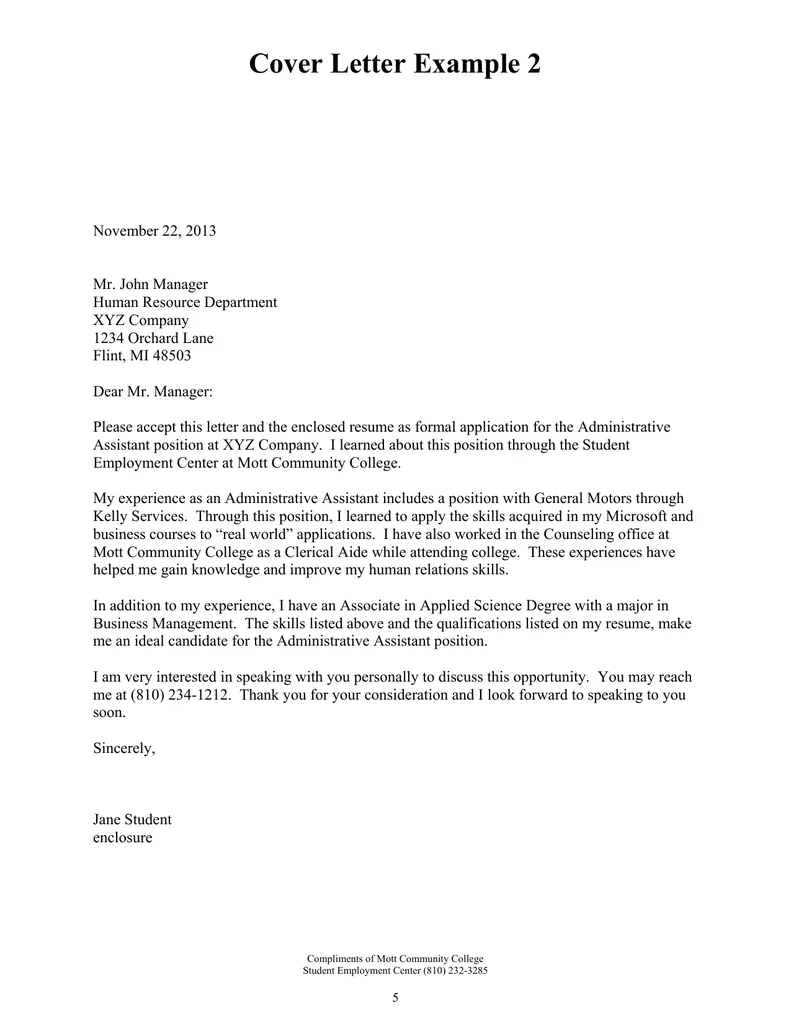
Community College Cover Letter Sample What to Include
A well-crafted cover letter is your first opportunity to make a positive impression on a hiring manager at a community college. It complements your resume by providing context and showcasing your personality, skills, and enthusiasm for the position. When creating a community college cover letter sample, it is essential to understand the specific requirements and expectations of the role. The cover letter allows you to expand on experiences, highlight relevant skills, and demonstrate your understanding of the community college’s mission and values. It should be tailored to each specific job application, demonstrating your genuine interest in the institution and your ability to contribute to its goals. By following this guide and using a community college cover letter sample, you can significantly increase your chances of landing an interview and ultimately securing your dream job.
Header Section
The header of your community college cover letter is crucial as it contains essential information about you and the recipient. It should be professional, accurate, and easy to read. Attention to detail in this section sets the tone for the rest of the document, showcasing your organizational skills and attention to detail. Ensure this section is formatted correctly to maintain professionalism and make it easy for the hiring manager to contact you.
Your Contact Information

At the top left of your community college cover letter, include your full name, address, phone number, and professional email address. Use a consistent format and a clear, legible font. Make sure your email address is professional, avoiding nicknames or casual language. Double-check the accuracy of your contact information to avoid any missed opportunities. The purpose here is to make it easy for the hiring manager to reach you, so accuracy and clarity are paramount.
Date and Recipient Information
Directly below your contact information, include the date. Then, on the left side, provide the hiring manager’s name (if known), their title, and the name and address of the community college. Research the hiring manager’s name; if you can’t find it, use the title of the person responsible for hiring. Ensuring this information is accurate demonstrates your attention to detail and your genuine interest in the position. This shows you’ve taken the time to research the role and the institution.
Body Section
The body of your cover letter is where you make your case, highlighting your qualifications and expressing your enthusiasm for the position. Each paragraph should have a clear purpose, connecting your skills and experiences to the job requirements and the community college’s mission. Use concise, clear language and avoid jargon. The body of your cover letter should demonstrate your understanding of the role, showcase your key accomplishments, and reflect your enthusiasm for the institution.
Opening Paragraph

Start your cover letter by stating the position you’re applying for and where you saw the job posting. Briefly mention why you’re interested in the role and the community college. If you have a personal connection or insight into the college’s mission, mentioning it can be a great way to make a positive first impression. Be enthusiastic and show that you’ve done your research. This initial paragraph sets the tone for the rest of your letter, so make sure it grabs the reader’s attention and entices them to learn more about you.
Highlight Relevant Skills and Experience
The second paragraph should highlight your most relevant skills and experiences. Connect your qualifications to the job requirements, using specific examples from your professional background. Quantify your accomplishments whenever possible to demonstrate the impact you’ve made in previous roles. Focus on skills and experiences that align with the needs of the community college. Use action verbs to describe your responsibilities and achievements, making your letter more compelling and memorable. This is where you demonstrate why you are the best candidate for the job.
Showcase Your Understanding of the College
Demonstrate your understanding of the community college’s mission, values, and programs. This shows that you’ve done your research and are genuinely interested in working there. Mention any specific initiatives or values of the college that resonate with you and explain why you’re a good fit. If possible, reference specific programs or faculty members that you admire. Customize your letter to reflect the unique characteristics of each community college you are applying to. Tailoring the letter to reflect the institution’s values is important.
Express Your Enthusiasm

In the final paragraph of the body, reiterate your enthusiasm for the position and the community college. Summarize your key qualifications and express your interest in an interview. Make sure to thank the hiring manager for their time and consideration. End with a strong closing statement that reinforces your interest in the role and your belief that you can make a meaningful contribution. Your enthusiasm should be genuine and reflect your eagerness to join the community college team.
Closing Paragraph
In your closing paragraph, re-state your interest in the position and express your availability for an interview. Mention any relevant attachments, such as your resume or portfolio. Thank the hiring manager for their time and consideration. Keep the closing concise, professional, and forward-looking. This is your final opportunity to leave a positive impression.
Complimentary Close and Signature
Use a professional complimentary close, such as “Sincerely” or “Best regards.” Leave space for your signature (if printing) and then type your full name. Ensure your signature is legible and easy to read. This final element of your community college cover letter emphasizes the professionalism of your application.
Proofread and Edit Carefully

Before submitting your cover letter, carefully proofread it for any errors in grammar, spelling, and punctuation. Read the letter aloud to catch any awkward phrasing or unclear sentences. Consider having a friend or career advisor review your letter for feedback. Proofreading is a critical step, as any errors can detract from your professionalism and diminish your chances of getting an interview. Ensure that all information is accurate and the formatting is consistent.
Formatting and Layout Essentials
The formatting and layout of your community college cover letter is critical to its readability and professional appearance. A well-formatted letter is easy to read and makes a good impression on the hiring manager. Proper formatting also reflects your attention to detail, which is a valuable skill in any professional setting.
Font and Font Size
Choose a clear and professional font, such as Times New Roman, Arial, or Calibri. Keep the font size between 10 and 12 points for readability. Avoid using overly decorative fonts that may be difficult to read. Ensure the font is consistent throughout the letter, which improves the overall professional look and feel.
Margins and Spacing

Use standard margins of 1 inch on all sides of the cover letter. Double-space between paragraphs and single-space within paragraphs. Ensure that the spacing is consistent throughout the document. Proper spacing improves readability and gives your letter a clean and organized appearance.
Length of the Letter
Keep your cover letter concise, ideally no longer than one page. Focus on the most relevant skills and experiences. Avoid including unnecessary information or overly lengthy descriptions. A concise cover letter demonstrates your ability to communicate effectively and respect the hiring manager’s time.
Customization for Each Application
The most effective community college cover letters are tailored to each specific job and institution. Generic cover letters are often rejected. Customize your letter by researching the community college, understanding its mission, and aligning your skills and experience with the job requirements. Personalize your letter to reflect your unique qualifications and interest in the role. The more effort you put into tailoring each cover letter, the higher your chances of securing an interview. Demonstrating your genuine interest is vital. Customize the letter to emphasize your understanding of the institution’s culture and values.