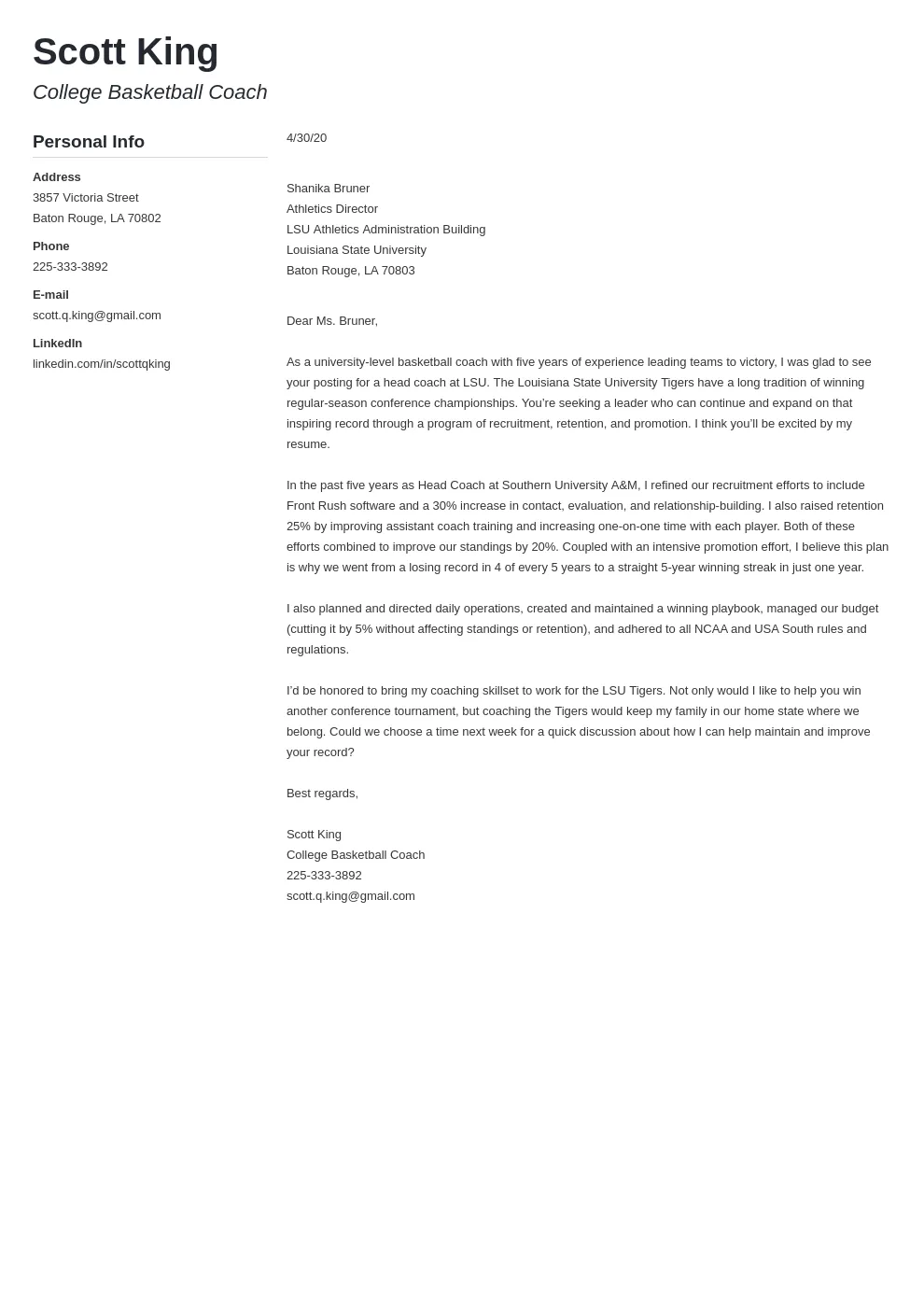
Crafting a Compelling Cover Letter
Your cover letter is your first impression – make it count! A well-crafted cover letter for a coaching job can significantly increase your chances of landing an interview. It’s your opportunity to go beyond your resume and tell a story, showcasing your personality, passion, and the unique value you bring to the table. Remember, a generic cover letter will likely end up in the rejection pile. A compelling letter grabs the reader’s attention immediately, clearly stating your interest and highlighting the key reasons you’re the ideal candidate. This initial impression sets the tone, making the hiring manager eager to learn more about your qualifications and experience. Investing time in this document is essential to the job search.
Highlight Your Coaching Experience
Detail your coaching experience, specifying the types of coaching you’ve done (e.g., executive, life, career). Mention the number of years you’ve been coaching and the specific industries or niches you’ve specialized in. Provide specific examples of your coaching methodologies and how you’ve applied them to achieve results. If you have experience in leadership roles, training programs, or mentoring, include these details, as they add depth to your coaching expertise. Showcasing a range of experience tells the hiring manager you’re versatile and have the ability to adapt to various situations and needs. Mention any certifications or professional development you’ve completed to bolster your credibility. Make sure your experience is clear, concise, and tailored to the job description.
Quantify Your Achievements

Use numbers and data to demonstrate your impact. Avoid vague statements, and instead, provide concrete examples of your successes. For instance, instead of saying “Improved client performance,” state “Increased client productivity by 30% within six months.” Or, “Helped clients achieve a 20% increase in their income.” These quantifiable achievements prove your effectiveness and give the hiring manager solid evidence of your abilities. Include metrics related to client satisfaction, retention rates, or any other measurable outcomes you’ve helped your clients achieve. The more specific you are, the more convincing your cover letter will be. Adding numbers brings credibility and showcases the value you bring.
Showcase Relevant Skills
Carefully review the job description and identify the key skills required. Then, explicitly state how you possess those skills, providing examples to illustrate your proficiency. Highlight communication skills, active listening, empathy, and problem-solving abilities. Emphasize your ability to build rapport, motivate individuals, and facilitate positive change. If the role requires specific technical skills or knowledge, make sure to mention them. Tailor your skills section to align with the specific requirements of the coaching job, showcasing a blend of hard and soft skills. This targeted approach shows the hiring manager that you have the specific capabilities needed to succeed in the position.
Tailor Your Letter
Customize your cover letter for each specific coaching job application. Generic cover letters often fail to make a strong impression because they don’t show that you’ve taken the time to understand the organization and the role. Research the company’s mission, values, and the specific needs of the position. Use the job description as a guide, incorporating relevant keywords and phrases. Highlight how your skills and experience align with the job’s requirements. By demonstrating that you understand the organization’s objectives and how you can contribute to their success, you’ll significantly increase your chances of getting an interview. Customization shows that you’re genuinely interested in the specific opportunity.
Formatting and Presentation

A well-formatted cover letter is essential for making a professional impression. Use a clean, easy-to-read font such as Arial or Calibri, and maintain consistent formatting throughout the document. Keep paragraphs concise and use bullet points to highlight key achievements or skills. Ensure your cover letter is free of grammatical errors and typos by proofreading carefully. Proper formatting shows attention to detail, which is crucial in coaching. Make sure to include your contact information, a professional salutation (e.g., “Dear Mr./Ms. [Last Name]” if you know the hiring manager’s name), and a polite closing. A well-presented cover letter demonstrates professionalism and enhances your credibility.
Emphasize Your Passion for Coaching
Express your enthusiasm for coaching and the impact it can have on individuals and organizations. Share your personal coaching philosophy and what motivates you to help others succeed. Explain why you’re drawn to the specific coaching role and what excites you about the opportunity. Demonstrating your passion goes beyond listing qualifications; it connects with the hiring manager on a personal level. This passion can be the deciding factor that sets you apart from other candidates. Showing your genuine commitment to helping others is what makes a great coach.
Research the Organization
Before submitting your cover letter, conduct thorough research on the organization. Understand their mission, values, and the specific coaching needs they have. Tailor your letter to reflect this understanding and highlight how your skills and experience align with their goals. Visiting the company website, reading their social media, or looking up news articles about the company can provide useful information. This shows that you’re genuinely interested in working for the organization. Mention specific programs, initiatives, or values that resonate with you, and explain how you can contribute to their success. Customization shows you care.
Demonstrate Cultural Fit

Highlight how your values and personality align with the organization’s culture. This is as important as your qualifications. Briefly explain how you work collaboratively, adapt to different environments, and approach challenges. Describe how your coaching style complements the organization’s approach to coaching. Reflecting the organization’s culture in your cover letter can make you a highly attractive candidate. Researching the company’s values, and including keywords from their mission statement, can show the hiring manager that you are a good fit for their team. Provide concrete examples that illustrate your cultural fit.
Closing with Confidence
End your cover letter with a confident and professional closing statement. Reiterate your interest in the position and express your enthusiasm for the opportunity to contribute to the organization. Thank the hiring manager for their time and consideration. Include a clear call to action, such as inviting them to contact you for an interview or mentioning that you look forward to discussing your qualifications further. A strong closing leaves a lasting positive impression and encourages the hiring manager to take the next step.
Call to Action
Include a clear call to action at the end of your cover letter. This guides the hiring manager on what you want them to do next. For instance, you might say, “I am eager to discuss how my coaching experience can benefit your organization. I am available for an interview at your earliest convenience.” Or, “Thank you for considering my application. I look forward to the opportunity to learn more about this exciting opportunity.” A strong call to action shows that you are proactive and encourages the hiring manager to take the next step. It is a vital element in the successful job application.
Proofreading and Editing

Before submitting your cover letter, thoroughly proofread and edit it to eliminate any errors. Typos, grammatical errors, and inconsistencies can undermine your credibility. Read your cover letter aloud to catch any awkward phrasing or unclear sentences. Ask a friend, mentor, or career counselor to review your cover letter for feedback. A fresh perspective can help you identify areas for improvement. The goal is to present a polished and professional document that showcases your skills and experience effectively. A well-edited cover letter conveys your professionalism and attention to detail.