What is a Career Change Cover Letter
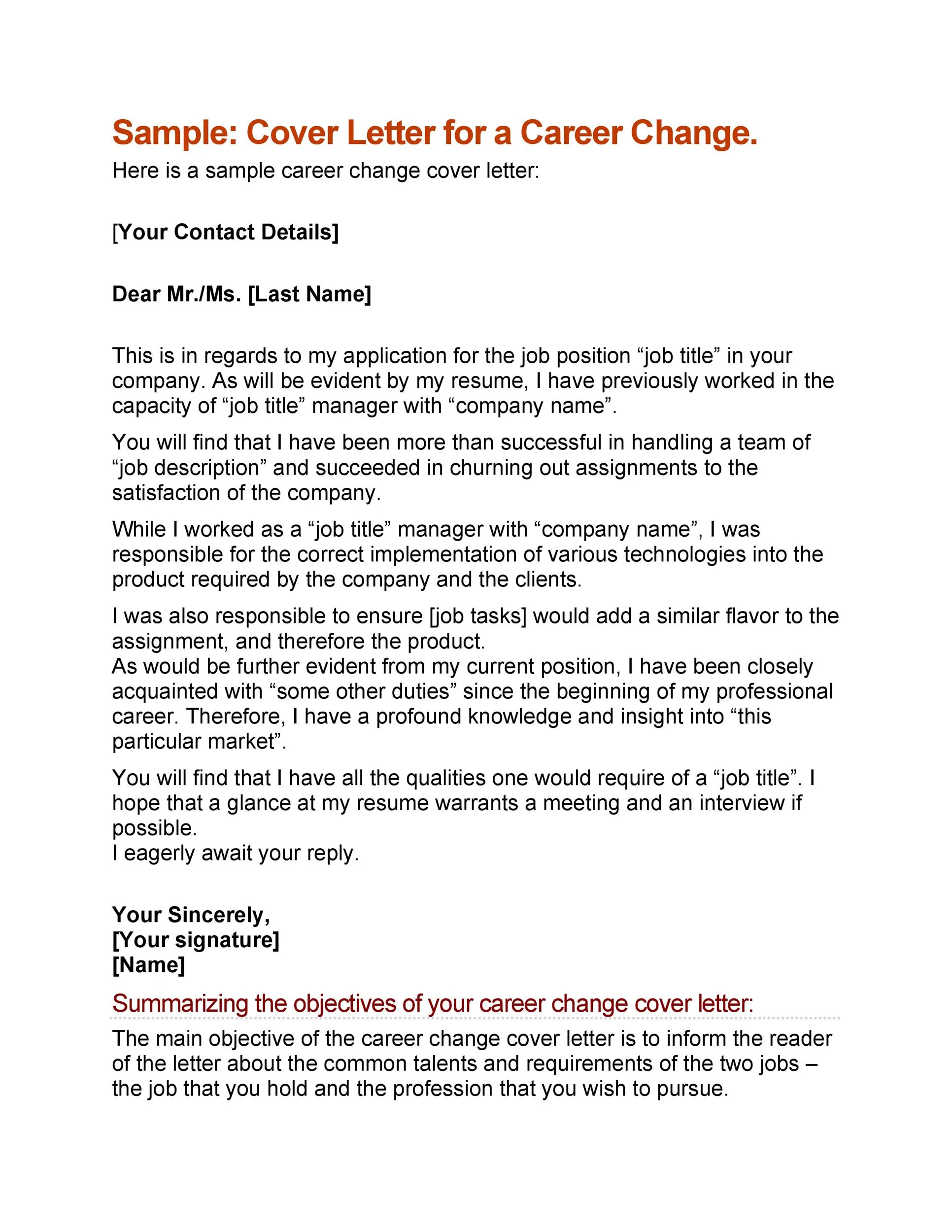
A career change cover letter is a specialized document designed to accompany your resume when you are seeking a job in a field different from your previous experience. It serves as your introduction to a potential employer, offering a compelling narrative that explains your motivations for the career shift and highlights your relevant skills and experiences. Unlike a standard cover letter that may simply reiterate your resume, a career change cover letter must address the elephant in the room—the lack of direct experience—while persuading the hiring manager of your suitability for the role. This requires careful crafting to demonstrate your understanding of the new industry, your commitment to the transition, and your ability to quickly learn and adapt.
Why You Need a Career Change Cover Letter
In the context of a career change, a cover letter becomes even more crucial than when applying for a job within your existing field. It’s your primary opportunity to explain the rationale behind your career shift, bridging the gap between your past experiences and the requirements of the new role. Without a cover letter, a hiring manager might immediately dismiss your application, assuming you lack the necessary qualifications. The cover letter allows you to articulate your transferable skills, which are skills gained in previous roles that can be applied to the new field. It also showcases your passion for the new industry and your willingness to learn, qualities that can often compensate for a lack of direct experience. Moreover, it provides a space to address any concerns or gaps in your resume, ensuring that the employer understands your career trajectory and potential.
Key Elements of a Career Change Cover Letter

A successful career change cover letter is built on several key elements. First, it must clearly state your intention to transition into a new career, specifying the role or industry you are targeting. Second, it must highlight the transferable skills you possess. These are skills, such as communication, problem-solving, leadership, or project management, that are applicable across different job functions. Third, the letter should explicitly address why you are making this career change, explaining your motivations and demonstrating your genuine interest in the new field. Finally, it needs to showcase your enthusiasm and commitment to learning, potentially mentioning any courses, certifications, or self-study efforts you’ve undertaken to prepare for the new role.
Highlighting Transferable Skills
One of the most critical aspects of a career change cover letter is the ability to identify and showcase your transferable skills. Begin by carefully reviewing the job description for the role you are applying for and identifying the key skills and qualifications the employer is seeking. Then, take an inventory of your past experiences, roles, and projects to find examples that demonstrate these skills. For instance, if the new role requires strong communication skills, you might highlight your experience in public speaking, writing reports, or presenting to clients. If the role involves project management, you could emphasize your experience in planning, organizing, and executing projects in your previous roles. The key is to frame your experiences in a way that shows how your skills align with the requirements of the new job.
Addressing the Career Change
Don’t shy away from addressing the career change directly in your cover letter. This demonstrates transparency and a proactive approach. Explain why you are making the shift, highlighting the factors that have driven your decision. Be clear and concise in your explanation. You might mention a growing passion for the new field, a desire for new challenges, or a long-term career goal that aligns with the new role. Avoid vague or generic statements. Instead, provide specific examples that show your genuine interest. For instance, if you are transitioning from marketing to data science, you might explain how your experience analyzing marketing data sparked your interest in data analysis and how you’ve since pursued relevant coursework or projects.
Showcasing Your Enthusiasm

Your cover letter should exude enthusiasm for the new career and the specific job you are applying for. Demonstrate your passion by discussing why you are excited about the opportunity and what aspects of the role or company particularly appeal to you. Mentioning specific projects the company has undertaken, industry trends you are following, or company values that resonate with you can illustrate your genuine interest. Your enthusiasm should be evident throughout the letter, from your opening statement to your closing remarks. This can help to overcome the perceived lack of relevant experience and convince the hiring manager that you are motivated, driven, and eager to succeed in the new role.
Structuring Your Career Change Cover Letter
A well-structured cover letter follows a logical flow, making it easy for the hiring manager to understand your qualifications and motivations. The structure typically includes a header, greeting, opening statement, body paragraphs highlighting skills and experience, a paragraph explaining your interest, and a call to action, concluding with a closing and signature. Each section serves a specific purpose, and the overall structure should guide the reader through your career change journey, showcasing your skills, enthusiasm, and fit for the role.
Header
The header of your cover letter should include your contact information, such as your name, phone number, email address, and optionally, your LinkedIn profile URL. It should be professional and clearly presented, ensuring the hiring manager can easily reach you. Make sure the contact information is up-to-date and accurate. Your header sets the first impression, so ensure that it is clean, well-formatted, and aligned with the overall professional tone of your letter.
Greeting

Address the hiring manager by name if possible. Research the company to find out the hiring manager’s name and title. Addressing your letter to a specific person demonstrates your attention to detail and initiative. If you are unable to find a specific name, use a general greeting like “Dear Hiring Manager” or “Dear [Department] Team.” Avoid generic greetings like “To Whom It May Concern,” which can make your letter feel impersonal and less engaging.
Body Paragraph 1 Opening Statement
The opening statement should immediately capture the reader’s attention and set the tone for the rest of the letter. State the specific role you are applying for and briefly mention where you saw the job posting. Then, provide a concise overview of why you are interested in the position and how your background aligns with the company’s needs. This is your first opportunity to explain your career change and create a positive first impression. Keep this section brief and to the point, setting the stage for the more detailed discussion of your skills and experiences that will follow.
Body Paragraph 2 Skills and Experience
In this section, highlight your transferable skills and relevant experiences. Focus on the skills and experiences that align with the requirements of the new role, providing specific examples from your past experiences. Use action verbs to describe your accomplishments and quantify your results whenever possible. Rather than simply listing your skills, explain how you applied them in previous roles and the positive outcomes that resulted. Tailor this section to the specific job description, emphasizing the skills and experiences that the employer is looking for.
Body Paragraph 3 Why You Are Interested
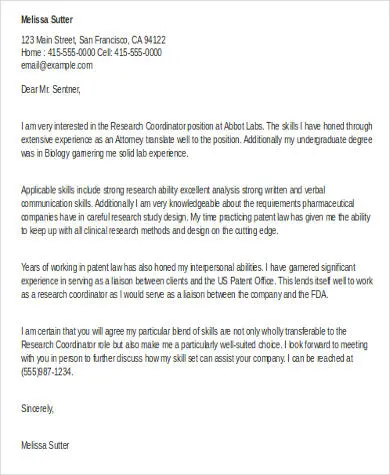
This is where you delve into your reasons for the career change and your interest in the specific role and company. Clearly articulate your motivations for the shift, explaining your passion for the new field and how it aligns with your long-term career goals. Show that you have researched the company, understand its mission, and are excited about the opportunity to contribute. Be specific about what attracts you to the role and what you hope to achieve. This section provides a crucial opportunity to demonstrate your genuine interest and commitment to the new career path.
Body Paragraph 4 Call to Action
Conclude your cover letter with a clear call to action, expressing your enthusiasm for the opportunity and your eagerness to discuss your qualifications further. Thank the hiring manager for their time and consideration. Express your interest in an interview, and provide your contact information again. Reiterate your excitement for the role and your confidence in your ability to contribute to the company’s success. This section should leave a positive and memorable impression, encouraging the hiring manager to move forward with your application.
Closing and Signature
Use a professional closing such as “Sincerely,” “Respectfully,” or “Best regards,” followed by your typed name. If submitting a hard copy, leave space for your handwritten signature above your typed name. Ensure that your signature and closing are consistent with the professional tone of your letter. Your closing should leave a final positive impression on the hiring manager.
Formatting Tips for a Professional Look

Ensure your cover letter is easy to read by using a professional font like Times New Roman, Arial, or Calibri, with a font size of 11 or 12 points. Use consistent formatting throughout the document, including consistent margins, line spacing, and paragraph alignment. Keep the letter concise, ideally no longer than one page. Use clear headings and bullet points to break up text and make it visually appealing. Proofread meticulously for any typos or grammatical errors, which can undermine your professionalism. A well-formatted cover letter demonstrates attention to detail and professionalism.
Proofreading and Editing Your Cover Letter
Thorough proofreading and editing are critical. Errors can undermine the credibility of your application. Read your cover letter several times, checking for any grammatical errors, spelling mistakes, or punctuation issues. Consider asking a friend, family member, or career counselor to review your letter for accuracy and clarity. Ensure that your cover letter is free of any inconsistencies and that the tone and language are professional and appropriate for the job you are applying for. Proofreading can be the difference between getting your application noticed or being overlooked.
Tips for Different Career Change Scenarios
Tailor your cover letter to address the specific circumstances of your career change. If you’re transitioning from a completely unrelated field, emphasize your transferable skills and enthusiasm for the new industry. If you’re moving to a similar role in a new field, focus on your relevant experience and explain why you are making the switch. If you have gaps in your employment history, address them honestly and explain what you have been doing in the interim. Customize your approach based on your situation to create a compelling narrative that demonstrates your suitability for the new role.
From [Previous Industry] to [New Industry]

If changing industries, highlight your transferable skills and explain how your experience in your previous industry has equipped you for the new role. Research the new industry and demonstrate your understanding of its trends, challenges, and key players. Show that you are committed to learning and adapting to the new environment. For instance, if you are moving from finance to tech, you might emphasize your analytical skills, problem-solving abilities, and any relevant tech-related coursework or projects you have undertaken.
From [Different Role] to [New Role]
When changing roles, focus on how your past experiences have prepared you for the new responsibilities. Clearly articulate the skills and knowledge you have gained in previous positions that align with the requirements of the target role. Provide specific examples of your accomplishments and how you have demonstrated those skills. Emphasize any relevant training, certifications, or projects that showcase your ability to excel in the new role.
Common Mistakes to Avoid
Avoid common mistakes, such as using generic language, failing to address the career change directly, or not tailoring your letter to the specific job and company. Don’t simply repeat your resume; instead, use your cover letter to provide context and explain your motivations. Avoid negative language or criticizing your previous employer. Always proofread your letter carefully to eliminate any errors. Presenting yourself in the best possible light is crucial when making a career change.
Using the Right Tone and Language
Maintain a professional and enthusiastic tone throughout your cover letter. Use clear, concise language and avoid jargon or overly complex sentences. Show genuine interest in the role and company. Use positive language and focus on what you can offer the employer. Convey confidence in your ability to succeed in the new role. Your language should be clear, easy to understand, and project professionalism. Your enthusiasm should shine through, but avoid sounding overly eager or desperate.
Dos and Don’ts of Career Change Cover Letters
Do highlight your transferable skills, explain your career change, and tailor your letter to the specific job. Do showcase your enthusiasm and interest in the new role and company. Do proofread carefully for errors. Don’t use generic language, repeat your resume, or criticize your previous employer. Don’t be vague about your career change. Do be honest and transparent about your motivations.
Tools and Resources for Writing Your Cover Letter
Utilize resources such as cover letter templates, online writing guides, and career counseling services to help you craft a compelling cover letter. Several websites offer free cover letter templates that you can customize to fit your needs. Consider using a grammar and spell-checking tool to catch any errors. Consulting with a career counselor can provide valuable feedback and help you tailor your cover letter to the specific job market. These tools and resources can streamline the writing process and increase your chances of success.