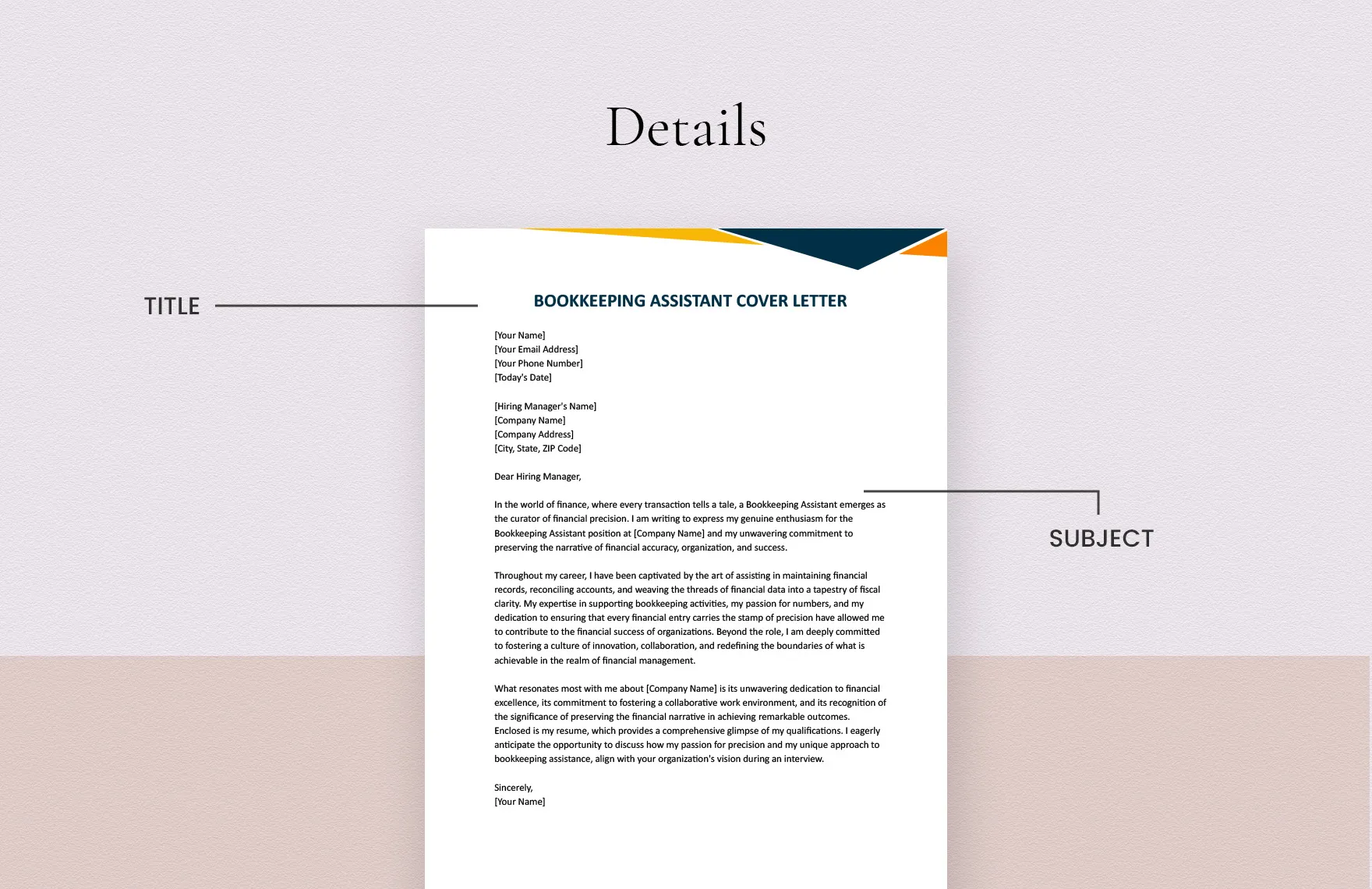
Crafting a Bookkeeping Cover Letter
A bookkeeping cover letter is your first opportunity to make a strong impression on a potential employer. It’s a vital document that accompanies your resume and provides context to your application. A well-crafted cover letter can significantly increase your chances of landing an interview. It’s not just a formality; it’s a chance to highlight your relevant skills, experience, and passion for the role. It allows you to personalize your application and show why you’re the perfect fit for the bookkeeping position. A cover letter provides the hiring manager with a glimpse into your personality, work ethic, and communication skills, all of which are critical in the field of bookkeeping. By carefully crafting this document, you can set yourself apart from other applicants and demonstrate your commitment to excellence.
Understanding the Purpose of a Bookkeeping Cover Letter
The primary purpose of a bookkeeping cover letter is to introduce yourself to the hiring manager and explain why you’re the best candidate for the job. It should complement your resume, not simply reiterate it. Instead, use the cover letter to elaborate on specific skills and experiences that are particularly relevant to the position. This is your chance to show how your qualifications align with the employer’s needs. It’s also an opportunity to express your enthusiasm for the role and the company. Your cover letter should demonstrate your understanding of the bookkeeping responsibilities, your knowledge of industry best practices, and your eagerness to contribute to the organization’s success. A well-written cover letter shows that you have taken the time to research the company and tailor your application accordingly.
Highlighting Your Bookkeeping Skills

When writing your cover letter, focus on the skills that are most important for a bookkeeping position. These may include accounts payable and receivable, general ledger maintenance, bank reconciliations, and financial reporting. You should also mention your proficiency in relevant software, such as QuickBooks, Xero, or other accounting programs. Illustrate your ability to manage financial records accurately and efficiently. Don’t just list your skills; provide specific examples of how you’ve used them in the past. For instance, describe a situation where you successfully reconciled a complex bank statement or streamlined an accounts payable process, saving the company time and money. Using quantifiable results, such as the percentage of error reduction or efficiency improvements, will make your skills more compelling. Highlight your ability to work independently, manage deadlines, and handle multiple tasks simultaneously. (bookkeeping-cover-letter-skills)
Detailing Your Experience in a Bookkeeping Cover Letter
Your experience is a critical part of your bookkeeping cover letter. Clearly outline your previous roles and responsibilities, emphasizing the aspects that align with the job description. Detail your accomplishments and quantify them whenever possible. For example, mention the number of accounts you managed, the size of the budgets you handled, or any improvements you made to financial processes. Showcase your experience with various industries or types of businesses if the job posting specifies industry preferences. If you’ve worked with similar companies or systems, make sure to point that out. Provide specific examples of how you’ve successfully handled challenging bookkeeping tasks, such as resolving discrepancies, implementing new accounting systems, or preparing financial reports. Be sure to mention any promotions or recognitions you received in previous roles, as this demonstrates your growth and expertise. (bookkeeping-cover-letter-experience)
Bookkeeping Software Proficiency
In today’s digital age, proficiency in bookkeeping software is essential. Make sure to highlight your experience with specific software programs. Mention which software you’re comfortable using, such as QuickBooks, Xero, Sage, or any other platforms that are relevant to the job requirements. If you are certified in any of these software, be sure to mention it. List the specific features you’ve used, such as accounts payable, accounts receivable, bank reconciliation, and reporting tools. Include any experience with payroll software, such as ADP or Paychex, as this skill is highly valuable. Provide examples of how you’ve used software to improve efficiency, reduce errors, or streamline accounting processes. Demonstrating your tech-savviness will make you a more attractive candidate. (bookkeeping-software)
Emphasizing Your Attention to Detail

Attention to detail is paramount in bookkeeping, so it’s crucial to showcase this skill in your cover letter. Mention specific examples of how you’ve ensured accuracy in your work. Detail instances where you caught errors, resolved discrepancies, or maintained meticulous financial records. Highlight any quality control measures you have used, such as double-checking entries, reconciling accounts, or implementing internal audits. Provide examples of how you’ve successfully minimized errors or prevented financial losses. Use phrases like “meticulous record-keeping,” “accurate data entry,” or “proven ability to identify and resolve discrepancies.” Showing your attention to detail will assure the hiring manager that you can be trusted with the company’s financial information.
Demonstrating Your Communication Abilities
Bookkeepers often interact with clients, vendors, and colleagues, so your communication skills are also important. Mention your ability to explain financial information clearly and concisely. Describe situations where you communicated complex financial data to non-financial professionals. Show your ability to write professional emails, reports, and other business communications. Emphasize your ability to actively listen, ask clarifying questions, and maintain a professional demeanor. Providing examples of successful communication, such as explaining a financial report to a client or resolving a billing dispute, can make your cover letter stand out. Highlight your ability to collaborate with other team members to achieve financial goals. Describe any experience with presenting financial information or conducting training sessions.
Showcasing Your Professionalism in Your Cover Letter
Your cover letter should reflect your professionalism. Use a professional tone and avoid slang or casual language. Proofread your cover letter carefully to eliminate any grammatical errors or typos. Use business-appropriate language and maintain a positive attitude throughout. Highlight any relevant certifications or professional memberships. If you have any experience with ethical conduct, make sure to mention it. Your professionalism shows that you respect the company’s values and you will conduct yourself professionally. Ensure your cover letter is well-organized and easy to read. Keep your cover letter concise and to the point, focusing on the information that is most relevant to the job. By showcasing your professionalism, you’ll make a positive impression on the hiring manager and demonstrate your commitment to the job.
Structuring Your Bookkeeping Cover Letter

A well-structured cover letter is easy to read and provides a clear overview of your qualifications. The standard structure includes contact information, a salutation, an opening paragraph, body paragraphs (skills and experience), and a closing paragraph. Each section should serve a specific purpose, highlighting your qualifications and expressing your enthusiasm for the position. A clear structure helps the hiring manager quickly grasp your key skills and experience. The use of concise paragraphs and bullet points further improves readability. Ensure your letter has a logical flow and that each paragraph supports the main points. Proper formatting and organization are crucial for making a good first impression.
Contact Information and Salutation
At the top of your cover letter, include your contact information (name, address, phone number, and email address). Be sure this information is accurate and up-to-date. Then, address the letter to the hiring manager by name, if possible; doing so shows that you’ve taken the time to research the company. If you can’t find the name of the hiring manager, use a professional salutation like “Dear Hiring Manager.” Avoid generic greetings such as “To Whom It May Concern.” This personal touch can make a positive impact. Use a professional email address, and double-check that you have the correct recipient’s name and title to avoid mistakes.
Opening Paragraph
Your opening paragraph should immediately grab the reader’s attention. State the specific position you’re applying for and where you saw the job posting. Briefly explain why you’re interested in the role and the company. Highlight one or two key skills or experiences that make you a strong candidate. The opening paragraph should be concise, engaging, and set the tone for the rest of your letter. Express your enthusiasm for the opportunity and the value you can bring to the company. Making a strong first impression is essential.
Body Paragraphs: Skills and Experience

The body paragraphs of your cover letter are where you provide detailed information about your skills and experience. Focus on the key requirements of the job. Use the job description to guide you, and tailor your letter to match the employer’s needs. Provide specific examples of how you’ve used your skills in the past, highlighting your accomplishments and quantifying your results whenever possible. Use the STAR method (Situation, Task, Action, Result) to provide context and show how you handled various situations. Highlight your proficiency in relevant software and your understanding of accounting principles. Be sure to mention any certifications or licenses that are applicable to the role. Demonstrate your knowledge of industry best practices and your commitment to accuracy and efficiency.
Closing Paragraph
In your closing paragraph, summarize your key qualifications and restate your interest in the position. Thank the hiring manager for their time and consideration. Express your enthusiasm for the opportunity to discuss your qualifications in more detail. Include a call to action, such as requesting an interview. Provide your contact information again. The closing paragraph should be concise and leave a positive lasting impression. End with a professional closing such as “Sincerely” or “Best regards,” followed by your name.
Formatting Your Bookkeeping Cover Letter
Formatting is a crucial aspect of creating a professional cover letter. Choose a clean, easy-to-read font, such as Times New Roman, Arial, or Calibri. Use a font size between 10 and 12 points. Set your margins to one inch on all sides. Use single-spacing within paragraphs and double-spacing between paragraphs to improve readability. Keep your letter concise, ideally one page in length. Break up large blocks of text with bullet points or short paragraphs. Ensure your cover letter is well-organized and visually appealing. Proofread your letter carefully to eliminate any formatting errors and ensure a polished presentation. (bookkeeping-cover-letter-formatting)
Choosing the Right Font and Style

The choice of font and style significantly impacts the readability and overall appearance of your cover letter. Select a professional, easy-to-read font like Times New Roman, Arial, or Calibri. Avoid overly decorative or unusual fonts, as they can make your letter appear unprofessional. Use a font size between 10 and 12 points to ensure that your letter is easy to read. Use a consistent font and style throughout your cover letter. Bold or italicize text sparingly, using it to emphasize key points or headings. Use headings and subheadings to break up the text and improve readability. The goal is to create a clean, well-organized document that is easy for the hiring manager to review.
Proofreading and Editing Your Cover Letter
Proofreading and editing are essential to ensure your cover letter is free of errors. Proofread your cover letter carefully for any spelling, grammatical, or punctuation mistakes. Check for inconsistencies in formatting, such as font sizes and spacing. Read your cover letter aloud to catch any awkward phrasing or sentences. Ask a friend or family member to proofread your letter for a fresh perspective. Use spell-check and grammar-check tools, but don’t rely on them completely; they can sometimes miss errors. Pay attention to detail, ensuring that every word and sentence contributes to the overall message. A well-proofread cover letter demonstrates your attention to detail and your commitment to quality.
Tailoring Your Cover Letter for Each Job
Avoid using a generic cover letter. Tailor your cover letter to each specific job application. Review the job description carefully, and highlight the skills and experiences that are most relevant to the position. Research the company and its values. Adapt your cover letter to align with the company’s mission and culture. Mention the specific skills and experiences that the employer is looking for. Use keywords from the job description in your cover letter. Personalize your letter to show that you’ve taken the time to understand the role and the company. Your tailored cover letter should clearly demonstrate why you’re the best candidate for the job. By demonstrating your understanding of the specific requirements of the role, you will significantly increase your chances of getting an interview.
Reviewing the Job Description

The job description is your guide to crafting an effective cover letter. Carefully review the job description, paying close attention to the required skills, experience, and qualifications. Identify the key responsibilities and requirements of the position. Highlight how your skills and experience align with these requirements. Make a list of keywords from the job description and incorporate them naturally into your cover letter. Make sure you address all the key requirements. This careful review ensures that you address the employer’s needs, increasing your chances of success.
Adapting Your Cover Letter to Match
Once you have thoroughly reviewed the job description, adapt your cover letter to specifically address the employer’s needs. Use the job description as a template, highlighting how your qualifications match the listed requirements. Use the same language and keywords that the employer has used. Provide specific examples of how you’ve demonstrated the required skills and experiences in the past. Tailor your tone and style to fit the company’s culture. If the job description mentions specific software or tasks, be sure to address them directly. Show that you have the necessary skills, and make it obvious why you’re a perfect fit. This targeted approach will demonstrate that you’ve paid attention to the job requirements and are genuinely interested in the role.
Examples of Strong Bookkeeping Cover Letters
Reviewing examples of successful bookkeeping cover letters can provide valuable insight and guidance. Look for cover letters that clearly articulate the applicant’s skills and experience. Pay attention to how the applicants highlight their qualifications and tailor their letters to the specific job. Examples show how to structure a cover letter effectively, including the opening, body paragraphs, and closing sections. Review examples that effectively use keywords, demonstrate professionalism, and express enthusiasm. Pay attention to the formatting, tone, and style of successful cover letters. Use these examples as a guide to crafting your own compelling cover letter. (bookkeeping-cover-letter-examples)
Common Mistakes to Avoid in a Bookkeeping Cover Letter

Avoiding common mistakes is critical to ensure your cover letter makes a positive impression. Avoid generic cover letters; always tailor your letter to the specific job. Don’t simply repeat your resume; use the cover letter to elaborate on your skills and experiences. Avoid typos, grammatical errors, and formatting inconsistencies. Do not use overly casual or informal language; maintain a professional tone. Avoid mentioning negative aspects of your previous jobs or your current situation. Do not include irrelevant information. Refrain from using jargon that the hiring manager may not understand. By avoiding these common mistakes, you can significantly improve the quality of your cover letter and increase your chances of getting an interview. (bookkeeping-cover-letter-mistakes)
Submitting Your Bookkeeping Cover Letter
Make sure you submit your cover letter and resume according to the instructions provided in the job posting. Usually, you’ll submit your cover letter as an attachment (e.g., a PDF or Word document) along with your resume. Always use a professional file name for your cover letter. Make sure the file format is compatible with the requirements of the job application. Double-check that you’re submitting the correct version of your cover letter and resume. Ensure that your contact information is up-to-date and correct. Submit your application before the deadline to ensure your application is considered. Following these guidelines will improve your chances of success.
Finalizing and Sending Your Cover Letter
Before submitting your cover letter, take a final step to finalize your cover letter. Review your cover letter one last time to make sure all the details are correct. Ensure the formatting is consistent and visually appealing. Verify that all attachments are included. Double-check that you’re sending your application to the right contact. Send a test email to yourself to ensure the email displays correctly. Submit your cover letter before the deadline, and be sure to check the job description. A well-crafted cover letter is a key step in securing your bookkeeping job. (bookkeeping-cover-letter-submit)