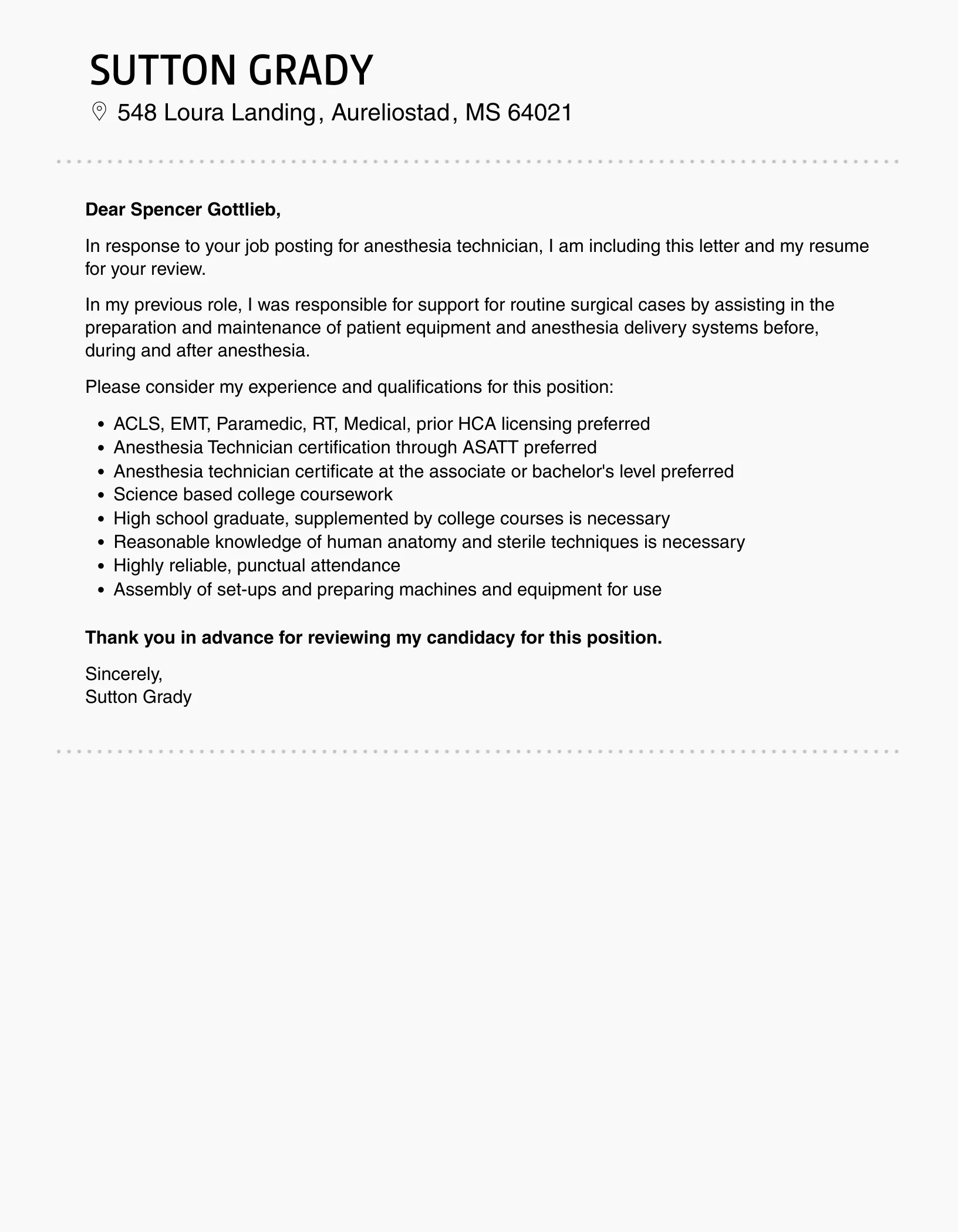
Highlighting Your Skills Anesthesia Cover Letter
An anesthesia cover letter is your initial opportunity to make a lasting impression on potential employers. It is crucial to use it effectively to showcase your relevant skills, experience, and qualifications. The goal is to demonstrate your suitability for the role and to convince the hiring manager to read your resume. This is your chance to go beyond the basic facts and reveal your passion for anesthesia, patient care, and your professional aspirations. A well-crafted cover letter can be the deciding factor in securing an interview, so it’s essential to dedicate time and effort to writing a compelling one. A strong cover letter will grab the attention of the hiring manager, providing a glimpse of your professional capabilities and personal qualities.
Key Skills for Anesthesia Positions
Anesthesia positions require a unique blend of technical expertise and interpersonal skills. Your cover letter should highlight these key skills to showcase your suitability. Technical proficiency is paramount, including skills such as airway management, medication administration, and monitoring patient vitals. Beyond the technical skills, you must also emphasize critical thinking, problem-solving, and the ability to remain calm under pressure. Moreover, adaptability and a commitment to lifelong learning are important, as anesthesia practices are constantly evolving. Strong communication skills, both written and verbal, are necessary to collaborate with other healthcare professionals. Finally, a dedication to patient safety and a deep understanding of ethical considerations are essential to excel in this field. Demonstrate your grasp of these skills to create a strong professional profile.
Technical Skills to Showcase

When highlighting technical skills in your anesthesia cover letter, be specific and provide concrete examples. Detail your experience with different anesthesia techniques, such as general anesthesia, regional anesthesia, and monitored anesthesia care. Mention any specialized procedures you’ve performed, like nerve blocks or epidurals. It’s important to include your experience with specific equipment and technologies, like anesthesia machines, patient monitors, and difficult airway management tools. Quantify your experience whenever possible, such as the number of procedures you’ve assisted with or the volume of patients you’ve managed. This level of detail shows employers the extent of your knowledge and ability. By providing clear examples, you validate your claims and make a persuasive case for your competence. This ensures that your application stands out in a crowded field. Include information about the types of anesthesia you’re proficient in.
Soft Skills to Highlight
While technical skills are important, soft skills are just as vital. Include skills such as communication, teamwork, and empathy. Highlight your ability to work effectively as part of a multidisciplinary team, collaborating with surgeons, nurses, and other healthcare professionals. Include examples of your ability to clearly and concisely communicate with patients and their families, addressing their concerns and providing reassurance. Describe your ability to remain calm and decisive during critical situations. Show your aptitude for problem-solving and adaptability, as anesthesiologists often need to make quick decisions based on dynamic situations. Demonstrate your commitment to patient safety, explaining how you prioritize it in your practice. Use your cover letter to prove that you possess strong interpersonal and emotional intelligence skills, crucial qualities that make you an effective anesthesia professional.
Quantifying Achievements in Your Cover Letter
Quantifying your achievements is one of the most effective ways to make a compelling case. Instead of just saying you have ’experience with patient care’, give specific numbers or percentages to demonstrate your impact. For example, you can write that you administered anesthesia for ‘over 500 surgical procedures’, or that you ‘reduced post-operative complications by 15%’ through your protocols. Whenever possible, link your accomplishments back to the requirements of the specific job. This highlights your ability to drive results, making your cover letter more memorable and persuasive. Highlighting metrics shows potential employers the true extent of your abilities. Ensure these metrics are verifiable and reflect positively on your skills.
Using Action Verbs to Describe Accomplishments

Action verbs make your cover letter more dynamic and engaging, making your achievements more impactful. Instead of passive phrases, use action verbs to actively describe your responsibilities and accomplishments. Start sentences with verbs such as ‘managed,’ ‘implemented,’ ‘coordinated,’ ‘improved,’ and ’led’. For example, ‘Managed the anesthesia care for over 300 patients’ is more effective than ‘Had experience with patient care’. The active voice presents you as proactive and results-oriented, attracting the employer. This technique not only makes your cover letter more readable but also shows your ability to take initiative and achieve results. Choose powerful verbs that accurately portray your role and the impact of your contributions.
Demonstrating Patient Care Experience
Patient care is the core of an anesthesiologist’s role, so your cover letter should emphasize your patient-focused approach. Discuss your experience in ensuring patient comfort and safety during procedures. Give specific examples of how you handled challenging situations. Mention any special certifications or training you have received. This helps you differentiate yourself. Include details about your bedside manner, your ability to communicate complex information in an understandable way, and how you build rapport with patients and their families. Showcase your empathy, ability to make patients feel at ease, and your commitment to providing a positive patient experience. By providing detailed examples, you demonstrate a genuine dedication to patient well-being, a factor essential to success.
Formatting Your Anesthesia Cover Letter
Formatting plays a crucial role in readability and impact. A well-formatted cover letter is easy to scan, allowing hiring managers to quickly grasp key information. The formatting enhances the professional appearance of your application. Use a clear, professional font, such as Times New Roman, Arial, or Calibri. Keep the font size between 10 and 12 points. Make sure to use proper spacing between paragraphs to improve readability. Break up long paragraphs into smaller, more manageable chunks to keep the reader engaged. Use bullet points to list skills and achievements to make them stand out. Proper formatting makes your cover letter not only attractive but also easier to read. The layout makes your letter look polished and professional, increasing the chances of a positive impression.
Choosing the Right Font and Formatting

The right font and format set the tone for your application, and are important for readability and visual appeal. Choose a classic font such as Times New Roman, Arial, or Calibri. These fonts are easy on the eyes and create a professional look. Avoid overly stylized fonts, as they can appear unprofessional. Ensure the font size is between 10 and 12 points, as this size is easy to read without straining the eyes. Use consistent formatting throughout the cover letter, including paragraph spacing and alignment. Maintain a consistent margin of at least one inch on all sides. Proofread your cover letter carefully to ensure there are no formatting errors, such as inconsistent spacing. Make your cover letter look professional and polished, ensuring your message is delivered effectively.
Structuring Your Cover Letter for Impact
Structure is important for your cover letter, influencing how the reader understands your message. Organize your cover letter into clear sections: an introduction, body paragraphs, and a conclusion. Begin with a strong introduction that states the purpose of your letter and briefly highlights your most relevant qualifications. The body paragraphs should expand on your skills, experience, and achievements, using specific examples to demonstrate your capabilities. Each paragraph should focus on a distinct aspect of your experience. The conclusion should reaffirm your interest in the position, summarize your key strengths, and include a call to action, such as requesting an interview. Following a clear structure ensures your cover letter remains easy to read and the key information is readily available to the reader.
Writing a Compelling Introduction
The introduction is your first opportunity to grab the reader’s attention. It needs to capture the reader’s interest. Start by clearly stating the position you are applying for and how you found the job posting. Briefly highlight your most relevant qualifications and skills to capture the hiring manager’s attention. Express your enthusiasm for the position and the organization, demonstrating your genuine interest. Avoid generic opening statements. Instead, personalize your introduction to reflect your unique qualifications and your understanding of the role. Make sure to customize the introduction to each application, showing that you have researched the employer and the position. This will show that you are truly interested in the opportunity. This will draw the reader in and encourage them to learn more.
Crafting Strong Body Paragraphs

The body paragraphs should give details on your qualifications, experience, and achievements. Each paragraph should focus on a specific skill, experience, or accomplishment that relates to the job requirements. Use the STAR method (Situation, Task, Action, Result) to structure your examples. Clearly explain the situation, the task you had to perform, the actions you took, and the results you achieved. Use quantifiable achievements to demonstrate your impact, such as the number of patients you managed or any process improvements you implemented. Support your claims with concrete evidence and data. Tailor the content of each paragraph to match the specific requirements of the job. By writing concise and persuasive body paragraphs, you prove that you possess the skills and expertise to excel in the role.
Writing an Effective Conclusion
The conclusion should restate your interest in the position and summarize your top skills and qualifications. Reiterate your enthusiasm for the opportunity and your belief that you would be a good fit for the role. Thank the hiring manager for their time and consideration. Include a clear call to action, such as requesting an interview or expressing your availability for further discussion. Avoid vague closing statements. Instead, use a strong closing that shows your confidence and eagerness. Proofread your conclusion to ensure it is free of errors and grammatically correct. A concise and professional conclusion can leave a positive final impression, increasing your chances of landing an interview.
Tailoring Your Cover Letter to Each Application
Tailoring your cover letter to each job application is essential to show you’re a good fit for the role. Customize your letter to reflect the requirements and expectations listed in the job description. Highlight the skills and experience that match the specific needs of the employer. Research the organization and demonstrate an understanding of their mission, values, and goals. Show how your qualifications align with the organization’s specific needs. Make sure the letter is not generic, but directly addresses the requirements of the position. Tailoring your cover letter shows you’ve put thought into your application and demonstrates that you are truly interested in the role. Customization will substantially improve your chances of standing out among other candidates.
Researching the Employer and Position

Researching the employer and the specific position is a necessary part of writing a targeted cover letter. Visit the organization’s website to learn about their mission, values, and the services they provide. Read the job description carefully to understand the specific requirements, skills, and qualifications. Search the internet for news articles, press releases, and social media posts about the organization. This will give you insight into their current projects and initiatives. Identify the key challenges and opportunities the organization faces, and consider how your skills and experience can help them. Include specifics about the organization and role in your cover letter, showcasing you’ve done your homework. Tailoring your cover letter to show you understand the organization is a great way to prove your interest and suitability for the position.
Customizing Your Letter to Match Job Requirements
Once you have researched the employer and position, customize your cover letter to match the job requirements. Review the job description again and identify the key skills and experiences the employer is seeking. Highlight the qualifications that align with these requirements. Use the same keywords and phrases from the job description. This helps the hiring manager quickly identify your relevance. Provide specific examples from your experience that demonstrate your abilities in those areas. Show how your skills and accomplishments can contribute to the success of the organization. Adjust your cover letter to reflect your understanding of the role. Customizing your cover letter allows you to make a strong case that you meet the requirements of the position and are a suitable candidate.
Proofreading and Editing Your Cover Letter
Proofreading and editing are essential to ensure your cover letter is polished and error-free. Carefully review your cover letter for grammatical errors, spelling mistakes, and punctuation issues. Ensure that the format is consistent and professional. Use a grammar checker and spell checker, but don’t rely solely on these tools. Read your cover letter out loud. This can help you catch awkward phrasing and identify any errors. Ask a friend, colleague, or career advisor to review your cover letter for feedback. They can provide an objective perspective. Multiple rounds of proofreading are essential. It will help you create a professional and error-free cover letter.
Common Mistakes to Avoid

Avoid common mistakes that can hurt your chances. Don’t use a generic cover letter that isn’t tailored to the specific job. Don’t make spelling or grammatical errors, as these create a negative impression. Avoid using jargon or technical terms that the hiring manager may not understand. Do not provide information that is irrelevant to the job or the organization. Do not write excessively long paragraphs or a cover letter that is too long. Do not include negative comments about previous employers. Avoid using a passive voice. Instead, use strong action verbs to highlight your skills and achievements. Correct any of these, and your cover letter will be more effective.
Getting Feedback on Your Cover Letter
Getting feedback from others is an important step in refining your cover letter. Ask a friend, family member, or mentor to review your letter. Seek advice from career counselors or employment specialists who can provide expert insight. Request feedback on the clarity, conciseness, and effectiveness of your writing. Ask them to assess whether your cover letter effectively showcases your skills and qualifications. See if it demonstrates your enthusiasm for the role and organization. Use the feedback to improve your cover letter. Be open to making revisions based on their suggestions. A fresh perspective can reveal weaknesses you might have overlooked. Getting feedback will help you create a more compelling and successful cover letter.
Understanding Anesthesia Terminology
Using the right terminology will help you demonstrate that you understand the field of anesthesia. Familiarize yourself with common terms and abbreviations, like MAC (Monitored Anesthesia Care), ASA (American Society of Anesthesiologists) physical status classification, and various types of regional anesthesia, such as spinal or epidural. When describing your experience, use the correct terminology for anesthesia techniques, medications, and equipment. This is a professional way to demonstrate your knowledge and qualifications. Using the right terminology shows that you are educated. If you are applying to a specific specialization, show you are familiar with the jargon.