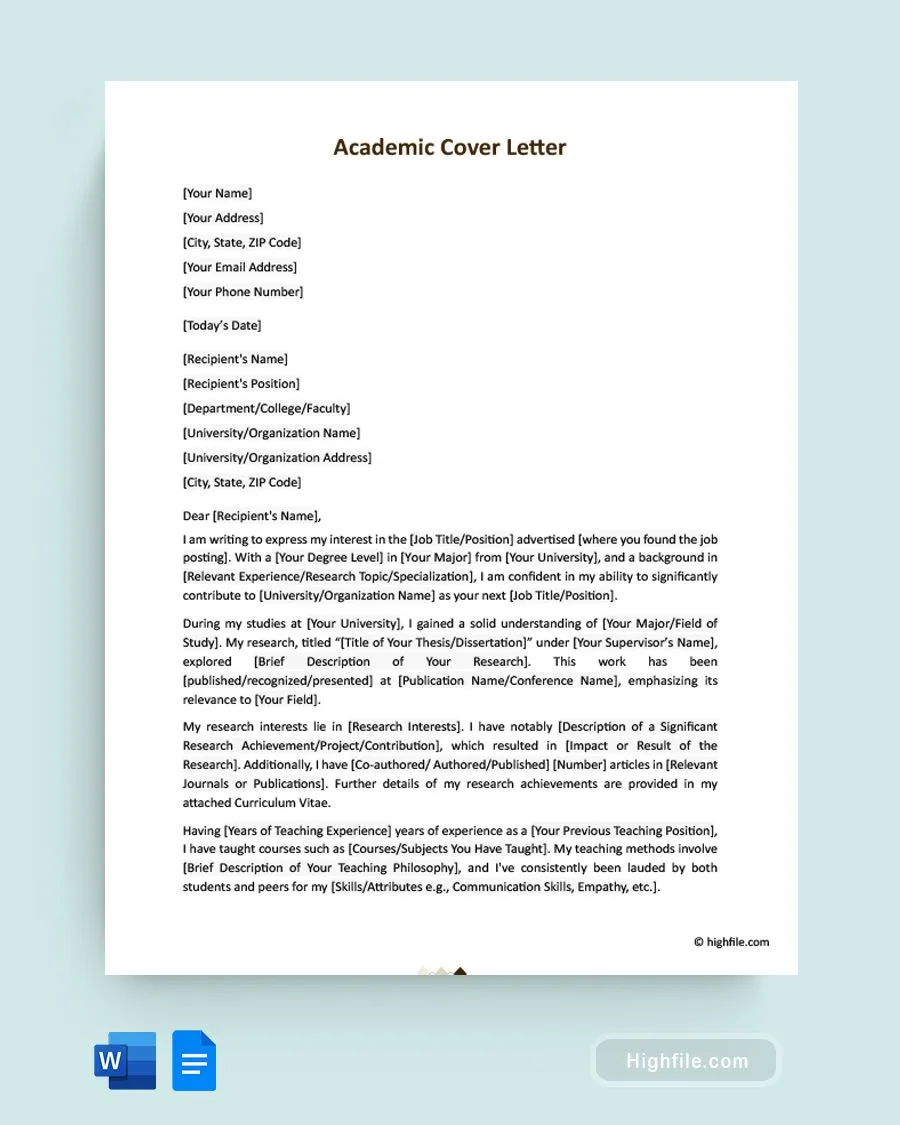
Landing a job in an academic library can be a rewarding career path, offering opportunities to work with diverse communities, contribute to research and education, and manage a wealth of information resources. However, to stand out from the competition, you need a compelling cover letter. This guide provides a step-by-step approach to crafting an effective academic library cover letter that highlights your qualifications, skills, and enthusiasm. By following these guidelines, you will improve your chances of securing an interview and ultimately, your dream job.
Understanding the Academic Library Cover Letter
The academic library cover letter is your first introduction to a potential employer. It serves as a crucial tool in marketing your skills, experience, and passion for the role. Unlike a resume, which provides a comprehensive overview of your professional history, the cover letter allows you to tell your story, explain your motivations, and highlight why you are the ideal candidate for the specific position. It is a chance to demonstrate your understanding of the library’s mission, the needs of its users, and your potential contributions to the institution’s success.
Key Components of an Effective Cover Letter
A well-structured academic library cover letter includes several key components that work together to create a strong and persuasive application. These components, which will be discussed in detail below, ensure that your message is clear, concise, and tailored to the specific job requirements. A carefully crafted cover letter showcases your professionalism, attention to detail, and genuine interest in the position.
Your Contact Information

At the top of your cover letter, include your contact information. This typically includes your full name, address, phone number, and professional email address. Make sure that your email address is professional and easy to read. This ensures the hiring manager can easily contact you to schedule an interview.
The Date
Immediately below your contact information, include the current date. This helps the employer know when you submitted your application. Using a standard format (Month, Day, Year) ensures that it is easily understood.
Recipient Information
Directly below the date, include the recipient’s information. This should include the hiring manager’s name, title, and the library’s address. Researching the hiring manager’s name will help you to personalize your letter. If you are unable to find a name, you can use a general title such as “Hiring Committee” or “Search Committee”.
Professional Salutation

Begin your cover letter with a professional salutation. If you know the hiring manager’s name, use “Dear Mr./Ms./Mx. [Last Name].” If you do not know the hiring manager’s name, use a general salutation like “Dear Hiring Committee” or “Dear Search Committee”. Avoid outdated greetings such as “To Whom It May Concern.”
Opening Paragraph
Your opening paragraph should immediately grab the reader’s attention. State the specific position you are applying for and where you found the job posting. Briefly mention your most relevant qualifications and your enthusiasm for the role. The opening paragraph sets the tone for the rest of your letter.
Expressing Your Interest
Clearly state your interest in the position and the institution. Explain why you are drawn to the specific job opportunity and what excites you about working in an academic library environment. Mention any specific programs, initiatives, or values of the library that resonate with you. Demonstrating genuine enthusiasm increases your chances of making a positive impression.
Highlighting Relevant Skills and Experience

The core of your cover letter should focus on highlighting your relevant skills and experience. Carefully review the job description and identify the key requirements and qualifications. Then, provide specific examples from your past experiences that demonstrate your abilities. Use the STAR method (Situation, Task, Action, Result) to explain how you addressed challenges and achieved positive outcomes in previous roles. This helps the hiring manager see your abilities.
Education and Qualifications
Detail your educational background, including degrees, certifications, and any relevant coursework or training. For academic library positions, a Master of Library Science (MLS) or a similar degree is typically required. Be sure to mention your degree-granting institution and the date of your graduation. You might also want to mention any specializations or areas of expertise within your library science education, particularly if they align with the job requirements.
Connecting with the Job Description
Carefully analyze the job description and explicitly address each of the required qualifications and responsibilities. Use keywords and phrases from the job description to demonstrate that you understand the role and its expectations. Explain how your skills and experience align with the position’s needs and how you can contribute to the library’s goals. Customize your letter for each specific job.
Tailoring Your Cover Letter

Avoid sending generic cover letters. Tailor each letter to the specific job and institution you are applying to. Research the library’s mission, values, and recent initiatives. Demonstrate your understanding of the library’s context and show how your skills and experience can contribute to its success. A customized cover letter shows the hiring manager that you have taken the time to understand the position and the organization.
Demonstrating Enthusiasm and Fit
Express your genuine enthusiasm for the position and the library. Describe why you are excited about the opportunity and what motivates you to work in an academic library. Show how your values align with the library’s mission and demonstrate your understanding of the library’s role in the community. Enthusiasm is contagious and can help you stand out from the competition.
Quantifying Your Achievements
Whenever possible, quantify your achievements and contributions. Use numbers, percentages, and specific data to demonstrate the impact of your work. For example, instead of saying “Managed a large collection,” say “Managed a collection of over 100,000 volumes, resulting in a 15% increase in user engagement.” This will provide concrete proof of your accomplishments.
Providing Specific Examples

Provide specific examples of your skills and experience. Avoid making general statements. Instead, use the STAR method to describe a situation, the task you were given, the actions you took, and the results you achieved. This will give the hiring manager a clear understanding of your capabilities. The specific examples help the hiring manager picture you in the role.
Closing Paragraph
In your closing paragraph, express your gratitude for the hiring manager’s time and consideration. Reiterate your enthusiasm for the position and the institution. Clearly state your availability for an interview and provide your contact information again. Keep the tone professional and confident.
Expressing Gratitude and Offering Availability
Thank the hiring manager for their time and consideration. Express your eagerness for the opportunity to discuss your qualifications further. State that you are available for an interview at their earliest convenience and provide your contact information.
Professional Closing and Signature

End your cover letter with a professional closing, such as “Sincerely” or “Best regards”. Leave space for your signature, and then type your full name. If submitting an electronic application, you can type your name.
Proofreading and Editing Your Cover Letter
Proofreading and editing your cover letter is critical. Carefully review your cover letter for any grammatical errors, spelling mistakes, or typos. Ensure that your sentences are clear, concise, and easy to understand. Consider having a friend, colleague, or career counselor review your cover letter before submitting it. A polished cover letter demonstrates professionalism and attention to detail.
Common Mistakes to Avoid
Avoid common mistakes that can negatively impact your application. These include generic cover letters, grammatical errors, typos, and failing to tailor your letter to the specific job. Avoid clichés, jargon, and overly formal language. Do not make negative comments about previous employers or positions. Ensure that your cover letter is error-free and highlights your strengths.
Formatting and Presentation
Pay attention to the formatting and presentation of your cover letter. Use a standard, easy-to-read font, such as Times New Roman or Arial. Use 1-inch margins and single-space your text. Keep your cover letter to one page, unless specifically requested otherwise. Use clear headings and bullet points to make your letter easy to scan and read. Create a professional appearance.
Using a Professional Tone
Maintain a professional tone throughout your cover letter. Use formal language and avoid slang or colloquialisms. Be polite and respectful, and always use proper grammar and punctuation. Your tone should reflect your professionalism and your ability to communicate effectively in a work environment.
Keeping it Concise
Keep your cover letter concise and to the point. Hiring managers are busy and may not have time to read a long letter. Focus on the most relevant information and avoid unnecessary details. Make every word count and ensure that your letter is easy to read and understand.
Seeking Feedback
Before submitting your cover letter, seek feedback from trusted sources. Ask a friend, colleague, career counselor, or mentor to review your cover letter and provide constructive criticism. They can help you identify any areas for improvement and ensure that your letter effectively conveys your qualifications and enthusiasm. Several eyes are better than one.
Submitting Your Cover Letter
Follow the application instructions carefully. Pay attention to the specific requirements for submitting your cover letter and resume. Submit your cover letter in the required format and ensure that all the necessary documents are included. Double-check that you are sending your application to the correct email address or mailing address. Attention to detail is essential.
Following Application Instructions
Carefully read and follow all instructions provided in the job posting. Pay attention to the required documents, formatting guidelines, and submission deadlines. Failing to follow these instructions can result in your application being rejected. Demonstrate your attention to detail and your ability to follow directions.
After Submission
After submitting your cover letter, follow up with the hiring manager if appropriate. Send a thank-you note or email to reiterate your interest in the position. Be patient and allow time for the hiring process. If you are not selected for an interview, use the experience as a learning opportunity and seek feedback to improve your future applications. Maintain a positive and proactive approach to your job search.
Preparing for the Interview
If you are selected for an interview, prepare thoroughly. Research the library and the position. Review your cover letter and resume and be prepared to discuss your qualifications in detail. Practice answering common interview questions and prepare questions to ask the interviewer. Dress professionally and arrive on time. A well-prepared candidate increases their chances of success.
Crafting an effective academic library cover letter is a key step in securing a job in this competitive field. By following the guidelines and tips provided, you can create a compelling cover letter that highlights your skills, experience, and enthusiasm. Remember to tailor your letter to each job, proofread carefully, and seek feedback. With a well-crafted cover letter, you will be well on your way to a successful career in an academic library. Good luck with your job search!